


By Shruti Menon Seeboo
At the recent 9th Pension Funds and Alternative Investments Africa (PIAfrica) 2026 summit in Mauritius, the conversation shifted from the availability of capital to the disciplined deployment of it. With African institutional assets now exceeding $2 trillion, the challenge is no longer finding the money but creating the “bankable” pathways to move it into the real economy.
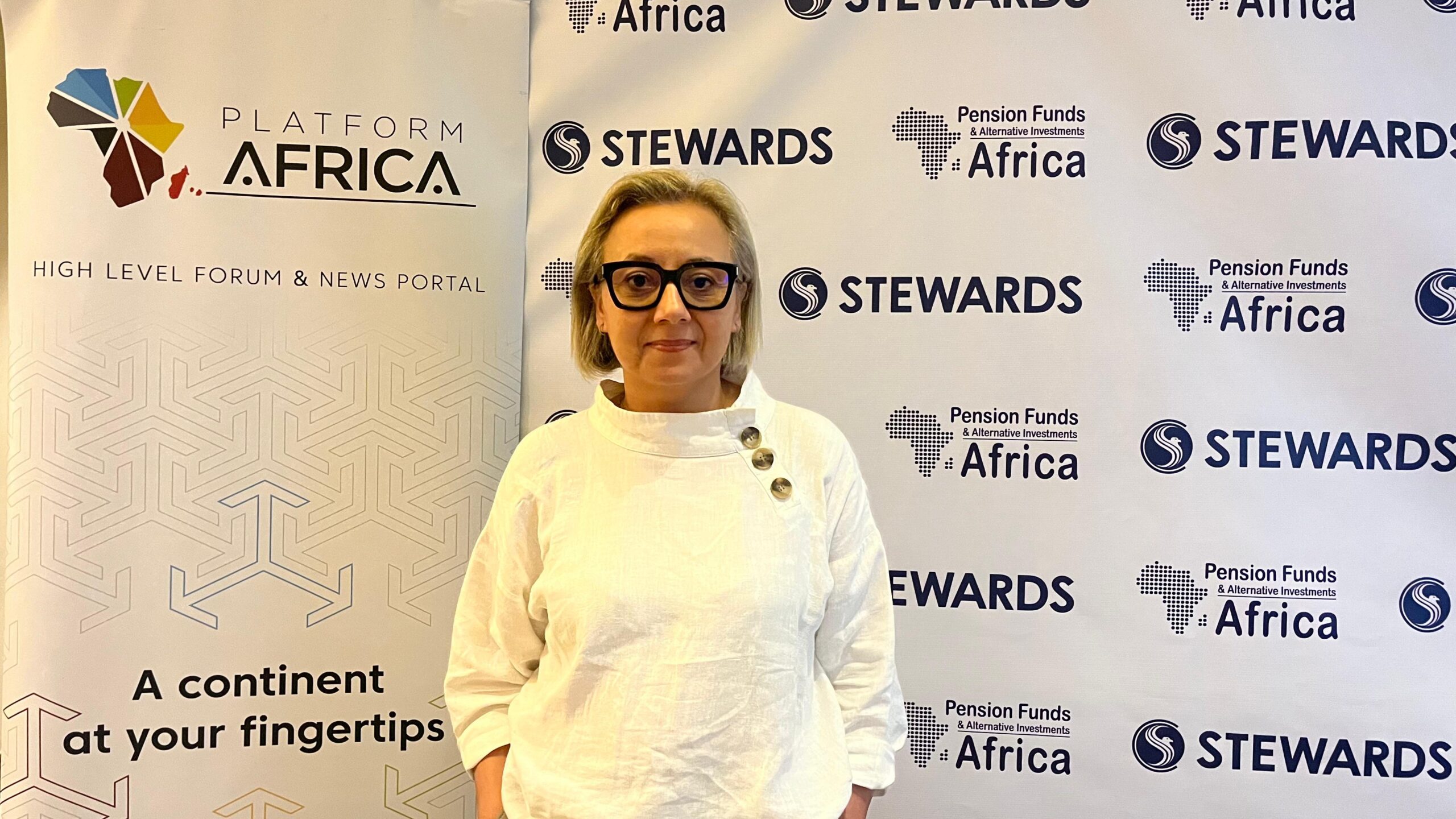
To explore this transition, we sat down with Samira Mensah, Managing Director of National Ratings & Analytical Solutions – Africa and Country Head for South Africa at S&P Global Ratings. As a lead voice in credit research, Samira is uniquely positioned to bridge the gap between high-level macro trends and the rigorous requirements of pension fund trustees.
In our discussion, Samira highlights that while global interest rates are stabilising, the path forward for African funds requires a “complex web” of regulatory alignment and risk mitigation. She argues that the bridge to higher-impact private credit isn’t just about appetite, but about transparent regulations and the strategic use of blended finance via Multilateral Lending Institutions (MLIs). Looking toward 2060, she explains why capturing Africa’s “demographic dividend” will depend on how aggressively funds pivot toward essential infrastructure, digital innovation, and affordable housing today. Excerpts:
- S&P Global recently highlighted that while global interest rates are stabilizing in 2026, African economies still face a complex web of execution barriers. From your research perspective, how can African pension funds bridge the ‘trust gap’ to move from passive government bonds into more active, higher-impact private credit without compromising their fiduciary duties?
Current regulatory frameworks in some markets permit substantial offshore allocations, which can lead to capital outflows. Transparent regulations and alignment with global standards can deepen local capital markets, creating a more favourable environment for private credit investments. Multilateral lending institutions (MLIs) are mobilizing capital through innovative financing structures, and pension funds serve as providers of long-term capital, which is essential for investing in critical sectors. Lastly, risk-mitigation tools such as credit guarantees and political risk insurance play a significant role in attracting private investment and expanding long-term financing options, thereby supporting pension funds in their investment strategies.
- Infrastructure is a pillar of this conference, yet there’s a persistent narrative about the lack of ‘bankable projects’ in Africa. Given S&P’s role in assessing creditworthiness, what specific structural or regulatory improvements are you seeing that might finally make large-scale African infrastructure projects attractive to local institutional investors at scale?
Globally aligned frameworks attract both domestic and international investors, while policy clarity and regulatory alignment determine whether capital stays in Africa—or flows out. African regulators are modernizing legal frameworks and enhancing financial-sector resilience while investing in digital infrastructure. These improvements create clearer rules and stronger governance, resulting in more predictable investment environments that reduce fiduciary risk for institutional investors in large-scale infrastructure projects. Regulators in several African markets are promoting diversification beyond government bonds and equities. South Africa, Botswana, Nigeria, and Namibia are expanding regulatory allowances for alternative asset classes, including private equity and infrastructure-linked vehicles. This shift allows pension funds to confidently allocate capital into long-term assets while adhering to fiduciary obligations.
- You’ve written about the role of Multilateral Lending Institutions (MLIs) in accelerating capital market development. In an era where ‘Trump 2.0’ trade policies and global shifts are impacting emerging markets, how critical is blended finance right now in de-risking the African private sector for local pension funds?
Africa MLIs play a crucial role in mobilizing capital and pioneering funding structures, transitioning towards an originate-to-distribute model to optimize their capital while supporting their strong credit ratings. We rate these MLIs between ‘A’ and ‘AAA’, underpinned by their robust policy mandates and strong balance sheets. The scaling of blended finance in Africa is hindered by limited institutional capacity and a persistent shortage of first-loss capital. However, MLIs are increasingly vital in bridging funding gaps as African sovereigns face fiscal constraints and seek innovative financing for infrastructure development. For instance, the African Development Bank (AfDB) recently launched a synthetic securitization platform aimed at de-risking its balance sheet by pooling and transferring credit risks from existing loans to other investors for a premium. While the shortage of first-loss concessional and private capital remains a challenge, such initiatives foster stronger public-private partnerships and act as catalysts for blended finance, ultimately creating pathways to de-risk and recycle capital at scale.
- S&P projects Africa’s population will be nearly one-third of the global total by 2060. For the pension fund managers in this room today, how should they be adjusting their long-term asset allocation strategies now to ensure they are actually capturing the ‘demographic dividend’ rather than just managing the risks of a rapidly growing population?
With the anticipated population growth, there will be a sustained demand for infrastructure development. Sectors such as transportation, energy, and telecommunications are likely to experience increased activity as urbanization accelerates. This demographic shift also indicates that demand for housing will rise, highlighting the importance of real estate development and affordable housing projects in meeting this need. Additionally, the growing population will require enhanced access to essential services, including healthcare and education, which will be critical in supporting a productive workforce. Furthermore, sectors that focus on improving productivity, such as technology and innovation, are expected to play a significant role in shaping the labour force, which is essential for maximizing the benefits of these demographic changes.