

By Shruti Menon Seeboo
In an era of shifting global dynamics, the relationship between Vietnam and the African continent is entering a sophisticated new phase of economic cooperation. At the heart of this evolution is Mauritius, a nation increasingly viewed not just as a regional partner, but as a critical “strategic gateway” for Vietnamese enterprises seeking to “go global.”
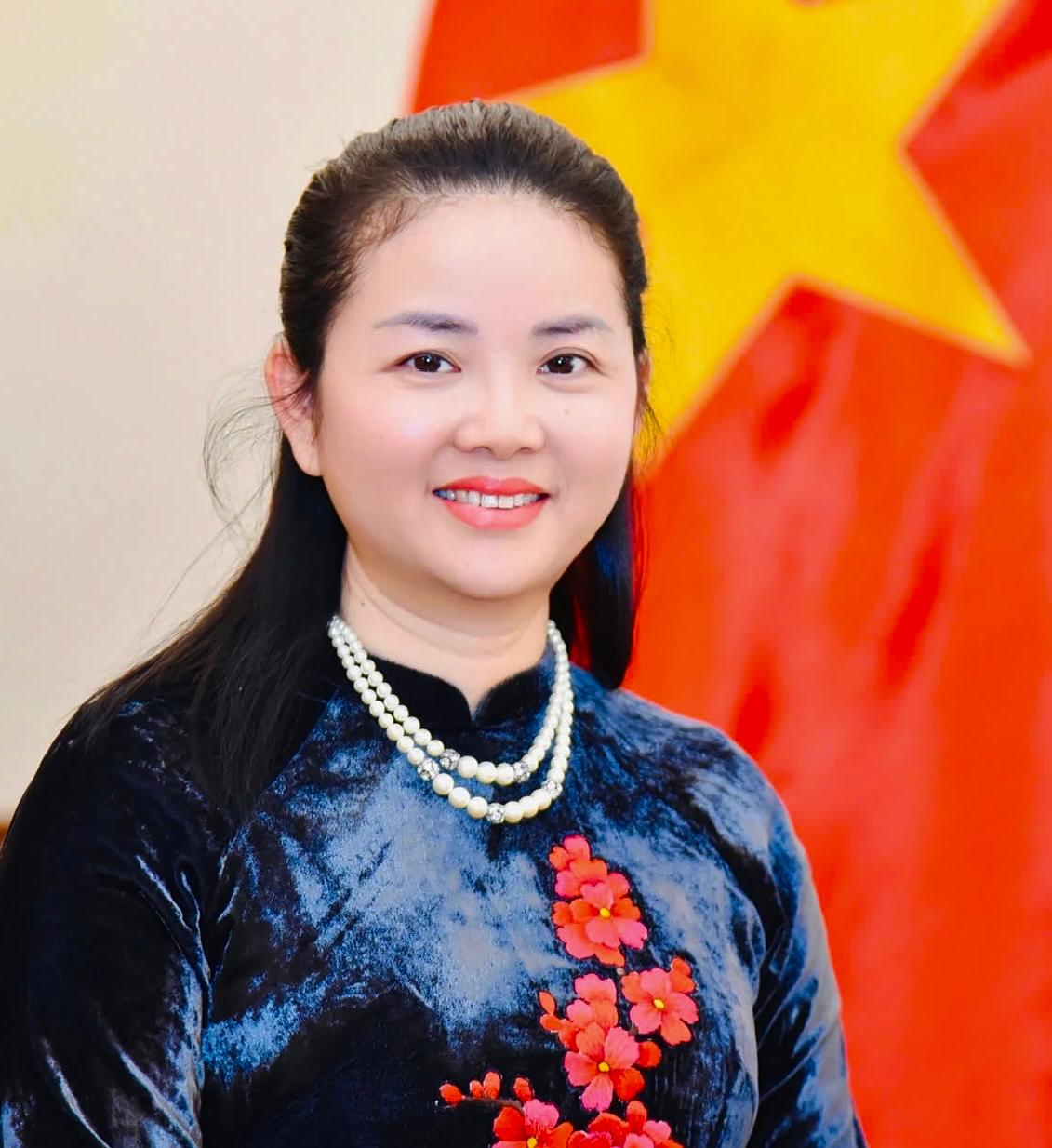
In this exclusive interview, Her Excellency Mrs Tran Thi Thu Thin, Ambassador of the Socialist Republic of Vietnam to Mozambique—with jurisdiction over Mauritius—explores how the Mauritius International Financial Centre serves as a secure institutional bridge for Vietnamese capital. From the operationalisation of the AfCFTA to synergies in the Blue Economy, the Ambassador outlines a vision of “co-development” and shared prosperity for the Global South. Excerpts:
1. Your Excellency, you have frequently highlighted Mauritius as a ‘strategic gateway’ for Vietnamese enterprises entering the African market. Beyond the geographical advantages, what specific legal or fiscal frameworks within the Mauritius International Financial Centre do you believe are most attractive to Vietnamese investors looking to expand into mainland Africa?
When we characterise Mauritius as a strategic gateway, we are looking far beyond its favorable position in the Indian Ocean. For Vietnamese enterprises which are seeking to “go global”, Mauritius represents a sophisticated and transparent financial ecosystem that effectively bridges the gap between our capital and expertise and African opportunities. I believe the true appeal of the Mauritius International Financial Centre lies in its ability to transform the perceived complexities of the African market into a structured, manageable, and highly secure investment path.
The first and perhaps most critical pillar of this attractiveness is the bedrock of political and legal stability that Mauritius provides. In an era of global uncertainty, investors prioritize “institutional certainty” above all else. Mauritius stands as a beacon of the rule of law, boasting a legal system that elegantly integrates both Civil and Common Law. This provides Vietnamese businesses with a predictable environment with clear regulations aligned with international standards.
Furthermore, the fiscal and operational frameworks within the Mauritius IFC are specifically designed to foster international business and ease of movement for capital. For Vietnamese enterprises that are exploring opportunities in Africa, Mauritius offers a reliable, well-regulated and international recognised platform to structure investments, manage risks, explore partnerships and manage operations across African markets.
Finally, we must recognize the immense strategic value of Mauritius’s extensive network of regional and international treaties. Mauritius has cultivated a formidable web of Double Taxation Avoidance Agreements and Investment Promotion and Protection Agreements with dozens of African nations. When combined with its active membership in the regional and continental platforms such as the African Continental Free Trade Area (AfCFTA), the South African Development Community (SADC), and the Common Market for Eastern and Southern Africa (COMESA), Mauritius offers Vietnamese investors a “preferential lane” into the continent. These frameworks do not just optimize tax liabilities; they serve as a legal shield that mitigates non-commercial risks.
In essence, Mauritius does not just point the way to Africa; it provides the opportunity of legal and fiscal infrastructure necessary for Vietnamese capital to flourish across the entire continent.
2. Vietnam possesses world-class expertise in aquaculture and maritime logistics, while Mauritius stewards a vast maritime territory. Is there a concrete roadmap for bilateral cooperation in the Blue Economy, and how might this partnership serve as a sustainable development model for other coastal nations across the Indian Ocean and Africa?
Blue economy is indeed a natural frontier for our bilateral partnership, given that both Vietnam and Mauritius share a profound historical and economic connection to the sea. While Viet Nam brings to the table its globally recognised expertise in high-yield aquaculture, sustainable seafood processing, and a rapidly modernizing maritime logistics infrastructure, Mauritius offers an immense exclusive economic zone that covers approximately 2.3 million square kilometers.
Both countries share a common understanding that ocean resources must be developed responsibly and sustainably. Some of the ideas that both sides can discuss include the synergy of Vietnamese technology and expertise with Mauritian resources, transition from traditional near-shore fishing to high-tech, offshore aquaculture, the establishment of value-added processing hubs within Mauritius.
Beyond production, our cooperation can expand to the digital and physical connectivity of our maritime routes, namely the collaborative frameworks for smart port management and logistics, aimed at making Mauritius a more efficient transshipment hub for Vietnamese goods destined for the African mainland and vice verse.
3. With the African Continental Free Trade Area (AfCFTA) now a reality, how does Viet Nam intend to leverage its diplomatic presence in Mozambique and Mauritius to integrate into these new value chains? Do you foresee Mauritius acting as a value-addition hub for Vietnamese semi-finished goods destined for the African mainland?
The operationalisation of the AfCFTA is a historic milestone that fundamentally reshapes the trade landscape of the continent, creating a market of about 1.3 billion people and a combined GDP of approximately 3.4 trillion USD. This opens new opportunities for trade, investment and industrial cooperation between Vietnam and the continent of Africa.
To understand the scale of this opportunity, we must look at the current momentum: in 2024, Vietnam’s export turnover to Africa reached approximately 4 billion USD, while our imports from the region stood at about 5.5 billion USD. There is a surging demand across African nations for agricultural products, foodstuffs, essential consumer goods, construction materials, and specialised agricultural machinery, all sectors where Vietnam possesses world-class manufacturing strengths. By eliminating tariffs on 90% of intra-African trade and reducing non-tariff barriers, the AfCFTA creates a fertile ground for Vietnamese goods to integrate into these nascent regional value chains.
In this context, our diplomatic missions, including the Embassy of Vietnam in Mozambique with its broad jurisdiction over Mauritius, Seychelles, Comoros and Madagascar, are focusing on opportunities arisen from the AfCFTA. Some of them are the facilitation of Vietnamese exports to reach entirely new, previously untapped markets through enhanced continental connectivity; an opportunity to reduce the costs of importing raw materials and agricultural inputs from Africa, which are vital for Vietnam’s own production lines; or the possibility of negotiating broader trade agreements with the continent, moving beyond bilateral silos to a more comprehensive economic partnership.
Mauritius, in particular, occupies a unique position in this strategy. Given its geostrategic advantgaes, stable political climate, and transparent legal and financial frameworks, I am convinced that Mauritius will play a pivotal role as a gateway for high-quality, competitive Vietnamese products, including our semi-finished goods. This partnership will ensure that Vietnamese enterprises are not observers of Africa’s growth, but active participants in its economic transformation.
4. During your recent engagements in Maputo and Port Louis, the theme of ‘high-quality human resources’ was prominent. Do you envision a trilateral educational framework where Vietnamese technical expertise in technology and agriculture can be exchanged with the sophisticated financial and service-sector insights of Mauritius?
The development of high-quality human resources is the invisible thread that will sew our economic strategies together. During my recent discussions in both Maputo and Port Louis, it became clear that while capital and infrastructure are essential, it is the “intellectual mobility” of our people that will sustain long-term growth. Vietnam stands ready to promote educational frameworks with our partners that are beneficial for the people, preferably a dynamic “knowledge exchange” where each nation contributes its core competitive advantage to create a new generation of global professionals.
Vietnam has made extraordinary strides in various fields, namely digital transformation and climate-resilient agriculture. We see immense potential in exchanges in technical training, digital skills, agricultural technologies. Collaboration between Vietnam, Mauritius and partners in the region, such as Mozambique, could help prepare the next generation of professionals capable of working in increasingly interconnecting Asian and African markets.
5. Mauritius has often expressed its gratitude for Viet Nam’s consistent support regarding the Chagos Archipelago and national sovereignty. In the current global climate, how central is the principle of ‘solidarity with the Global South’ to Viet Nam’s modern diplomatic strategy within the African Union and the United Nations?
Vietnam’s support for Mauritius regarding the Chagos Archipelago is not merely a bilateral gesture; it reflects our deeply rooted commitment to the principles of international law and the United Nations Charter. These principles are fundamental not only to Vietnam’s foreign policy but also to the broader aspirations of many countries in the Global South.
In the current global climate, characterised by complex geopolitical shifts, the principle of “solidarity with the Global South” has transitioned from a historical sentiment into a central, strategic pillar of Vietnam’s modern diplomacy. Within the halls of the United Nations and through our growing engagement with the African Union, Vietnam advocates for a more equitable global governance system towards enhancing the position and voice of developing countries. For Vietnam, the Global South is not just a geographic designation, but a collective force for peace, stability, and sustainable development.
With Africa, Vietnam established diplomatic relations will all countries in the continent. Vietnam aspires to strengthen cooperation with the African Union across the fields of politics, diplomacy, economics, trade and investment, development cooperation, and culture. Vietnam stands ready to contribute more directly and proactively to the AU’s collective efforts toward ‘an integrated, prosperous and peaceful Africa, driven by its own citizens and representing a dynamic force in the global arena’. Our solidarity is expressed through concrete actions: from deploying peacekeepers to UN missions in Africa to sharing our experiences in poverty reduction and food security. We are moving beyond traditional diplomacy toward a model of “co-development”. where we leverage our shared history of struggle to build a future of shared prosperity.
6. As an Ambassador overseeing multiple jurisdictions, what is the primary misconception that Vietnamese business leaders still hold regarding the African continent, and how are you working to reshape that narrative to foster deeper economic ties?
The most common misconception is the tendency to view Africa as a single, uniform market characterised by risks and instability. This narrative overlooks the incredible diversity and the rapid changes occurring across the continent, which also expose huge opportunities for economic cooperation for mutual benefits.
My mission as the Ambassador of Vietnam in African countries is to replace this “narrative of risk” with a “narrative of opportunity and partnership”. To reshape this perception, our first and most vital direction is to strengthen two-way external information exchange. We want Vietnamese enterprises to better understand the immense potential, the vast opportunities, and the vigorous transition currently taking place across Africa. Simultaneously, we are working to ensure that African partners have a clear understanding of Vietnam as a nation of remarkable developmental achievements, innovative people, and high-quality products.
Information alone, however, is not enough. A core part of our strategy is to facilitate business dialogues, connect Vietnamese businesses with reliable partners, promote and organise business delegations to visit and explore African markets firsthand. There is no substitute for being on the ground to “see with one’s own eyes and hear with one’s own ears”. By facilitating these direct encounters, we help our entrepreneurs move past hesitation and recognise the tangible, large-scale potential that Africa offers for Vietnamese investment and technology.
Finally, we recognise that entering any new market involves challenges, which is why the Embassy is committed to closely supporting and accompanying our businesses throughout their journey in Africa. We do not just open the door; we stay by their side to provide timely guidance and help them resolve obstacles or issues that may arise. Our mission is to ensure that Vietnamese enterprises feel secure and supported. By providing this “diplomatic shield” and practical bridge, we hope to turn misconceptions into successful ventures and building a lasting, prosperous partnership between Vietnam and the African continent.