


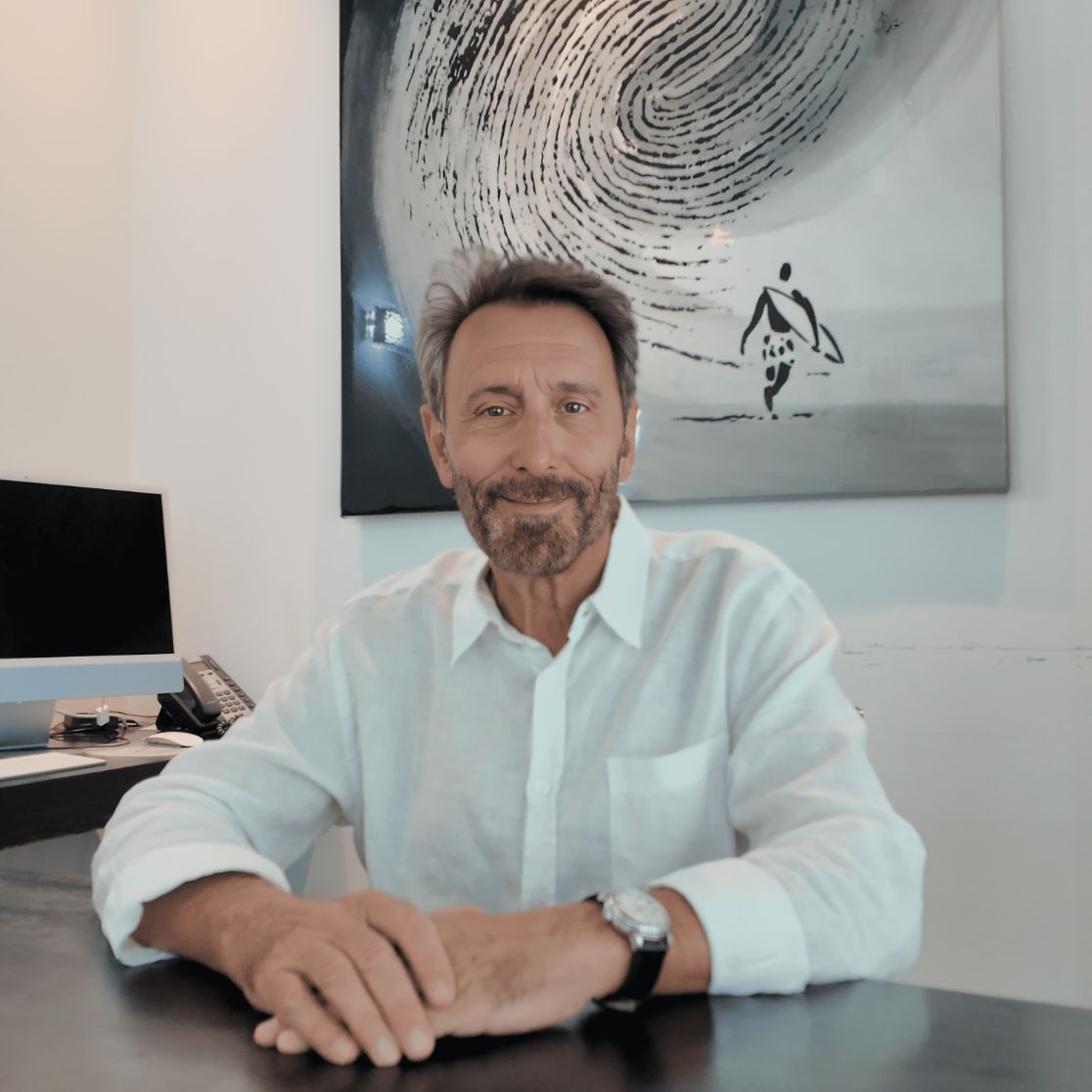
The Centre de Chirurgie Esthétique de l’Océan Indien (CCEOI) continues its partnership with Dr Marc Fleischmann, a France-trained dermatologist whose practice at the centre is dedicated exclusively to aesthetic dermatology. With extensive experience across medical, surgical, and aesthetic disciplines, Dr Fleischmann brings a restrained, clinical perspective to an industry often crowded by transient trends and over-the-counter “hacks.”
Rooted in the principles of protection, consistency, and early prevention, his philosophy prioritises skin quality and restoration over radical transformation. From managing the delicate shifts of hormonal changes to the restorative potential of collagen biostimulation, Dr Fleischmann advocates for a personalised, medically sound approach to long-term well-being. In the following interview, he shares his professional insights on the most effective medical-aesthetic solutions for every stage of life:
- What is the number one rule during hormonal changes?
The essential rule is protection and consistency. The skin becomes more reactive under hormonal influence, so it is important to avoid aggressive or constantly changing routines. The most important step remains daily photoprotection, combined with a simple and appropriate skincare routine. In aesthetic dermatology, consistency is always preferred over an excess of products.
2. What should women in their 20s and 30s do to avoid heavier procedures later on?
Today, the approach is clearly preventive. From their twenties, women should protect their skin from sun exposure, maintain skin quality, and avoid smoking. In practice: prevention of photoaging, gentle stimulation of collagen, maintenance of skin hydration, and Well-maintained skin at an early stage can significantly delay the need for more invasive procedures later in life.
3. What are the best medical-aesthetic solutions during menopause?
Menopause leads to a rapid decline in collagen and a deterioration in skin quality. Effective solutions include deep hydration (skin boosters)
collagen biostimulation, tightening technologies (radiofrequency, ultrasound). The goal is not transformation, but restoration of density, elasticity, and radiance.
4. What are the “silent” signs that should not be ignored?
Some signs are often underestimated: appearance of pigmentation spots, persistent adult acne, chronic redness, loss of radiance or early skin laxity. These manifestations may reflect underlying skin or hormonal imbalances. Early management allows for simpler and more effective treatments.
5. When should someone consult a specialist instead of following skincare “hacks”?
As soon as a condition persists, worsens, or does not respond to standard skincare, it is advisable to consult a specialist. Over-the-counter products have their limits and do not always address root causes. A specialist provides an accurate diagnosis and a tailored treatment plan. In aesthetic dermatology, the aim is to avoid approximation and ensure a personalised and safe approach. In conclusion, modern aesthetic dermatology is built on a preventive and personalized approach, where skin quality takes precedence over transformation, with the primary goal of preserving confidence and long-term well-being.