

by Alvyn Ulrish Shad Savrimuthu
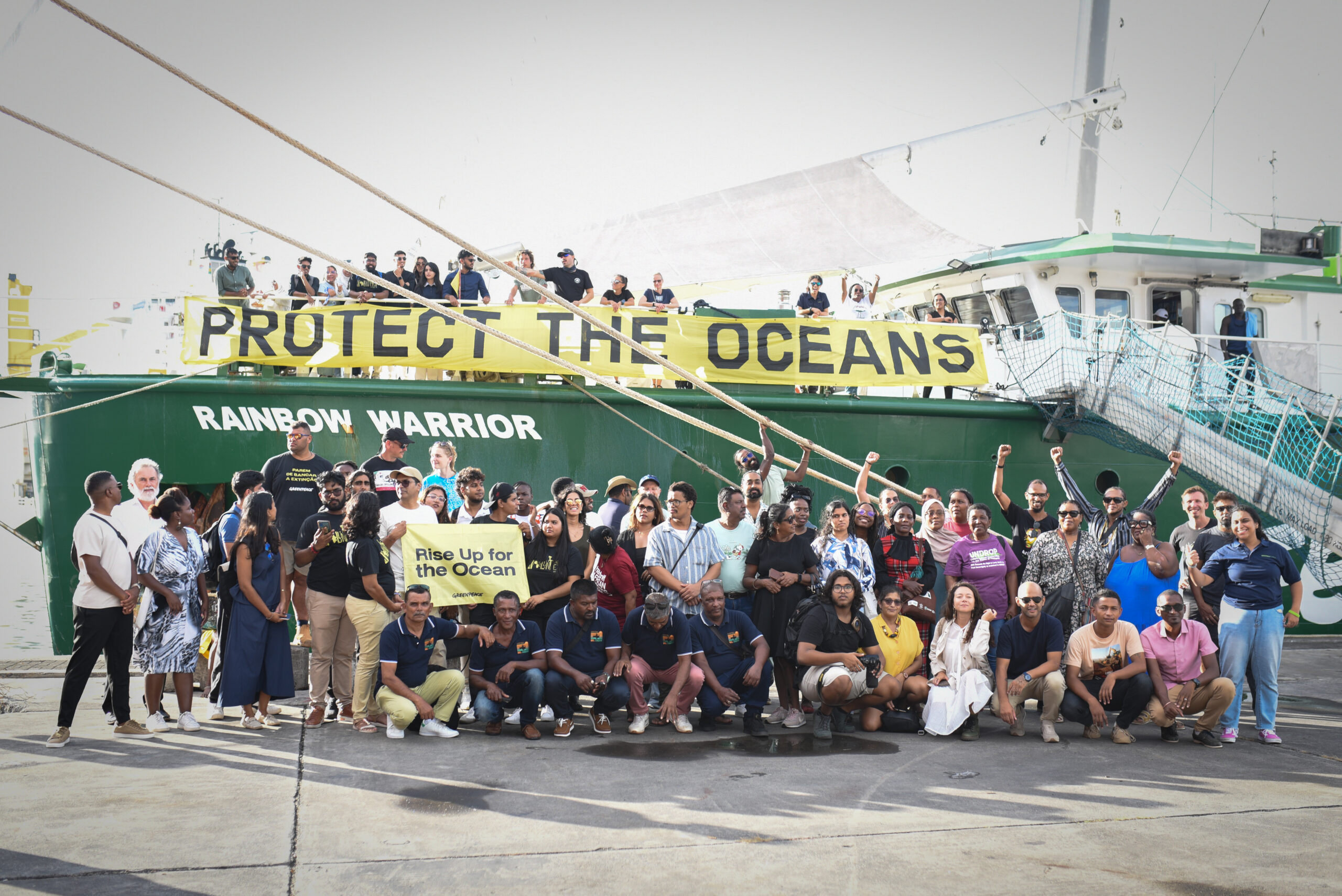
The iconic Rainbow Warrior, Greenpeace’s flagship vessel, arrived in Port Louis on 24 April 2026, marking a significant moment for ocean conservation efforts in the Indian Ocean. The visit brings together civil society organisations, youth, and environmental partners for a series of activities focused on marine protection and climate resilience.
At a time when oceans are facing increasing pressure from overfishing, pollution, and climate change, the stop in Mauritius underscores the island’s growing importance in safeguarding marine ecosystems. Over the coming days, the Rainbow Warrior will host ship visits, round table discussions, and training sessions with volunteers, creating opportunities for dialogue, knowledge sharing, and collaboration among stakeholders.
Captain Emili Trasmonte of the Rainbow Warrior highlighted the unique role Mauritius plays in this regional effort, noting that while every port carries the same message about ocean protection, “in Port Louis, we find something different, a community that already understands what is at stake and is ready to act.” This sense of readiness, she added, is something that should not be taken for granted.
The visit also draws attention to critical priorities for the region, including the protection of the Saya de Malha Bank, the world’s largest seagrass meadow located in Mauritian waters. With the recent advancement of the UN High Seas Treaty, Mauritius is now uniquely positioned to contribute to the creation of Marine Protected Areas beyond national jurisdiction. At the same time, the need to address destructive industrial fishing practices and strengthen accountability for plastic pollution remains central to ongoing discussions.
Speaking to Platform Africa, Barry Bijoubert, a crew member of the Rainbow Warrior, explained that Mauritius represents a strategic and meaningful stop for Greenpeace’s operations in the region. He noted that the organisation conducts extensive work across the Indian Ocean and that having a presence in Mauritius provides a valuable base of support, with local teams and volunteers contributing to ongoing efforts. He described the island as a strong strategic point that reinforces collaboration across the region.
Reflecting on the 2020 Wakashio oil spill, Barry emphasised the lasting impact such events have on both ecosystems and communities. He explained that the damage affects marine life, local fishermen, and the broader environment, with consequences that extend to key sectors such as tourism. He stressed the importance of continued accountability, highlighting the need for oil companies to operate responsibly and for governments to ensure that any related activities are conducted under the highest safety standards.
Looking ahead, he underlined the importance of collective action across African island states and beyond. For him, meaningful progress depends on collaboration, with countries, organisations, and communities working together towards a shared goal. He also pointed to the growing global awareness around climate issues, noting that increased engagement from local actors, youth, and institutions is helping to drive change and keep environmental protection at the forefront of public discourse.
The Rainbow Warrior’s stop in Mauritius forms part of a wider regional journey across Africa and the Indian Ocean, aimed at strengthening partnerships and supporting local initiatives. As Mamadou Kaly Ba, Oceans Campaign Lead at Greenpeace Africa, explained, Mauritius stands at a turning point, where the decisions and alliances formed today have the potential to shape the future of ocean protection across the region.
Through this visit, Greenpeace Africa aims to reinforce connections between people, ideas, and action, ensuring that the momentum built contributes to a healthier and more resilient ocean for future generations.