

By Shruti Menon Seeboo
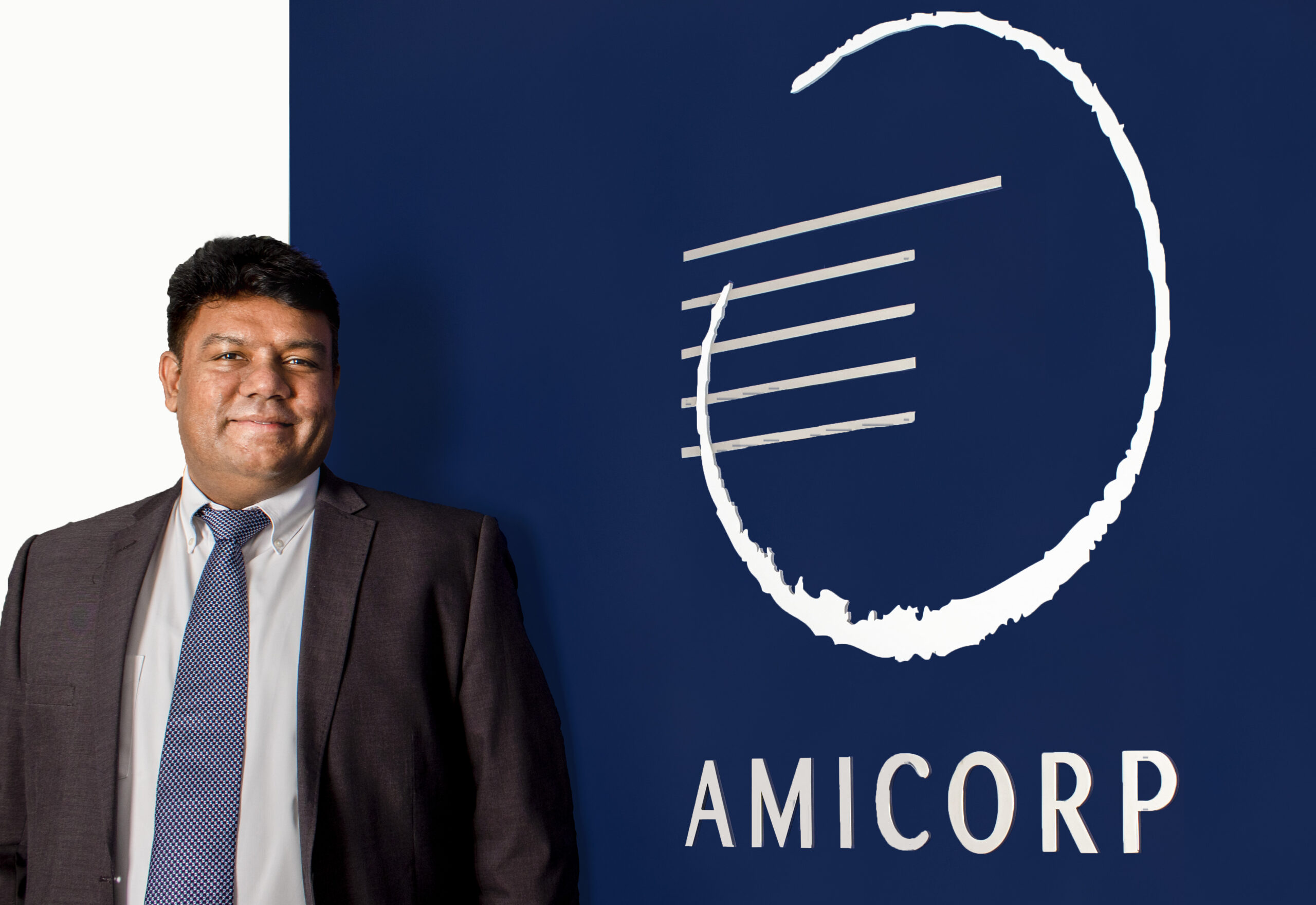
When the 6th India-Africa Entrepreneurship & Investment Summit convenes in Cape Town from 13 to 15 July, the conversation around capital flows, fund structuring, and cross-border investment will find an informed and experienced voice in Shainav Gupta, Director at Amicorp. With roots in investment banking — having previously held roles at D.E. Shaw & Co. and Microsec Capital Limited before joining Amicorp in 2019 — Gupta brings to the table a deep understanding of emerging market investment structures and the regulatory frameworks that underpin them. Amicorp itself is a globally recognised provider of fund administration, corporate services, and capital markets solutions, with a presence spanning more than 40 jurisdictions and a Mauritius operation established in 2011 to support institutional investors, corporations, family offices, and development finance institutions investing across Africa and Asia. At this year’s Summit, Gupta offers a practitioner’s perspective on why Mauritius continues to punch above its weight as a gateway for cross-border capital — and what the deepening India-Africa investment corridor means for fund managers and investors on both sides of the equation.
For Gupta, the case for Mauritius as a structuring hub begins with a combination of factors that few other jurisdictions can match in a single location. “Mauritius has established itself as one of the leading international financial centres serving investment flows between Africa, Asia, and global markets,” he says. “Its strategic location, political stability, sophisticated regulatory framework, and extensive network of Double Taxation Agreements and Bilateral Investment Treaties make it particularly well suited for cross-border fund structuring and international investment.” He is equally clear about what the jurisdiction offers investors on a practical level. “For investors seeking exposure to Africa and other emerging markets, Mauritius offers a combination of legal certainty, investor protection, ease of doing business, and access to a highly skilled financial services ecosystem,” he says.
He also points to the jurisdiction’s proactive stance on innovation. “The jurisdiction has also been proactive in developing innovative fund and corporate structuring solutions through a well-regulated environment supported by the Financial Services Commission and a mature banking sector,” he says. On Amicorp’s own journey in Mauritius, he notes: “At Amicorp, we recognised these advantages early and established our Mauritius office in 2011 to support institutional investors, corporations, family offices, and development finance institutions investing across Africa and Asia.” Over time, he adds, “Mauritius has become an important hub for clients seeking efficient, transparent, and internationally recognised structures that support long-term investment objectives.” Looking ahead, he is equally confident: “As investment flows between Africa, Asia, and the rest of the world continue to grow, Mauritius remains well positioned to serve as a trusted gateway for capital, expertise, and cross-border business activity.”
On the question of how investor appetite for Africa-focused funds is evolving, Gupta is clear that the old view of Africa as a single undifferentiated asset class is giving way to something far more nuanced. “Africa is not a single investment market but a diverse continent comprising 54 countries, each with its own economic priorities, regulatory frameworks, and growth opportunities,” he says. “As a result, investors are becoming increasingly targeted in their approach, focusing on specific markets, sectors, and investment themes rather than viewing Africa as a single asset class.”
He identifies the sectors generating the strongest interest. “We are seeing growing interest in sectors such as technology, artificial intelligence, digital infrastructure, renewable energy, education, healthcare, financial services, and logistics,” he says. “These sectors are benefiting from strong demographic trends, increasing digital adoption, and rising demand for infrastructure and services across many African economies.” From a structuring perspective, he points to the growing appeal of flexible vehicles. “Investors are increasingly seeking flexible and scalable vehicles that can accommodate multiple investment strategies and jurisdictions,” he says. “This is where structures such as Variable Capital Companies have proven particularly effective. VCCs offer fund managers the flexibility to establish segregated sub-funds under a single umbrella structure, making them attractive for private equity, venture capital, real estate, family office, and sector-focused investment strategies.” On the investor base driving this activity, he adds: “We continue to see strong participation from development finance institutions, institutional investors, family offices, and strategic investors looking to access Africa’s long-term growth potential. Many of these investors are combining financial objectives with broader impact goals, particularly in sectors that contribute to economic development, financial inclusion, sustainability, and infrastructure expansion.”
Looking ahead, he says: “We expect continued growth in demand for professionally structured investment vehicles that can efficiently channel both impact capital and growth capital into African markets. As capital markets across the continent continue to mature and investment opportunities expand, jurisdictions such as Mauritius are well positioned to support fund managers and investors seeking transparent, internationally recognised, and operationally efficient structures.”
On the role of Mauritius’s Double Taxation Agreement network in facilitating investment from India and Asia into Africa, Gupta offers a measured and precise view. “Mauritius’s extensive network of Double Taxation Agreements and Bilateral Investment Treaties is one of several factors that has helped establish the jurisdiction as a leading gateway for investment into Africa,” he says. For investors from India and other Asian markets, he argues, the value proposition runs deeper than treaty access alone. “The primary benefit is not simply treaty access, but the combination of legal certainty, investor protection, regulatory stability, and an internationally recognised framework for structuring cross-border investments,” he says. “These factors are particularly important when investing across multiple African jurisdictions, each with its own regulatory and commercial environment.”
He also highlights Mauritius’s positioning within regional economic frameworks. “Mauritius also benefits from its strategic position within the African investment landscape,” he says. “Its participation in regional economic frameworks such as SADC and COMESA, together with the ongoing development of the African Continental Free Trade Area, reinforces its role as a bridge between international capital and African growth opportunities.” Beyond treaties, he points to a broader ecosystem of strengths. “Mauritius offers a sophisticated financial services ecosystem, a well-regulated banking sector, a strong legal framework, and a deep pool of professional expertise,” he says. “These attributes provide investors with confidence that their structures can be managed efficiently and in accordance with international standards.” At Amicorp, he notes, “we have seen continued interest from institutional investors, family offices, fund managers, and corporations seeking exposure to Africa’s long-term growth story. Many of these investors are looking for a jurisdiction that combines operational efficiency with robust governance and regulatory oversight, and Mauritius continues to meet those requirements.” On the trajectory of Asia-Africa investment flows, he concludes: “As investment flows between Asia and Africa continue to expand, we expect Mauritius to remain an important platform for facilitating capital deployment, supporting fund structures, and enabling cross-border investment strategies across the continent.”
For asset managers and family offices navigating the complexities of cross-border investment into Africa, Gupta identifies a set of recurring challenges that require experienced guidance to resolve. “Cross-border investment into Africa presents significant opportunities, but it also requires investors to navigate a diverse landscape of regulatory frameworks, compliance requirements, and market-specific considerations,” he says. “Given the continent’s size and diversity, there is no one-size-fits-all approach to structuring investments.”
He points to the importance of aligning structures with evolving international standards. “One of the key considerations for asset managers and family offices is ensuring that investment structures are aligned with both international best practices and local regulatory requirements,” he says. “As African capital markets continue to mature and attract greater international investment, investors increasingly require structures that offer flexibility, transparency, governance, and operational efficiency.” On the compliance dimension, he is equally direct. “Another important consideration is balancing regulatory compliance with commercial objectives,” he says. “Global standards relating to governance, economic substance, risk management, and investor protection continue to evolve, making it essential for fund managers to work with experienced partners who understand both the regulatory landscape and the practical realities of operating across multiple jurisdictions.” He highlights the role of VCCs again in this context. “This is where flexible structures such as VCCs have gained significant traction,” he says. “VCCs allow fund managers to establish multiple segregated sub-funds under a single umbrella structure, providing scalability and operational efficiency while supporting a wide range of investment strategies.
For emerging managers, incubator and umbrella fund solutions can also help reduce barriers to entry and accelerate time to market.” On Amicorp’s own approach, he says: “At Amicorp, we support clients throughout the entire lifecycle of their investment structures, from establishment and regulatory coordination to ongoing administration, governance, and compliance support. Drawing on more than three decades of experience across emerging markets, we help investors navigate complexity while maintaining the highest standards of transparency, governance, and operational excellence.” Looking to the future, he adds: “Ultimately, as investment flows between Africa, Asia, and global markets continue to increase, we believe demand will continue to grow for well-structured, internationally recognised investment vehicles that provide both investor confidence and access to long-term growth opportunities.”
On where the most significant growth in demand for fund administration and capital markets services is likely to emerge, Gupta is expansive. “At Amicorp, we believe the strongest growth in demand for fund administration and capital markets services will come from the continued expansion of investment flows between Asia and Africa, particularly as investors seek exposure to the continent’s long-term growth opportunities,” he says.
He identifies the sectors leading that wave of interest. “Across Africa, we are seeing increasing interest in sectors such as technology, digital infrastructure, renewable energy, financial services, healthcare, education, logistics, and consumer-driven businesses,” he says. “These sectors are attracting attention from institutional investors, family offices, private equity firms, venture capital managers, and strategic corporate investors from across Asia and other global markets.” He also points to the growing sophistication of investor expectations. “As investment activity becomes more sophisticated, demand is also growing for professional fund administration, governance, compliance, reporting, and investor servicing solutions,” he says. “Investors increasingly expect internationally recognised structures, robust oversight, and operational transparency, creating significant opportunities for jurisdictions such as Mauritius that offer a mature financial services ecosystem and strong regulatory framework.”
On Mauritius’s enduring role as a bridge, he says: “Mauritius remains well positioned to serve as a bridge between Asian capital and African opportunities. Its established financial infrastructure, political stability, skilled professional workforce, and connectivity to regional economic frameworks such as COMESA, SADC, and the African Continental Free Trade Area strengthen its role as a gateway for cross-border investment.” At Amicorp, he notes, “we are seeing growing demand from fund managers and investors looking for efficient, scalable structures that support investments across multiple African markets while maintaining high standards of governance and regulatory compliance. As African capital markets continue to deepen and investment flows increase, we expect demand for fund administration, capital markets, and cross-border structuring services to grow alongside them.”
He closes with a view that speaks directly to the Summit’s broader ambitions. “The long-term opportunity lies not only in facilitating capital flows into Africa, but also in supporting the development of more sophisticated investment ecosystems that can connect global investors with the continent’s expanding growth sectors,” he says — a vision that captures precisely what the gathering in Cape Town this July is setting out to advance.