


In a press release on August 6, the Board of the Economic Development Board (EDB) reveals that it has approved in the month of July a slew of strategic initiatives targeted to spur investment, boost exports and enhance business facilitation while supporting economic transformation. The aim is to help buttress the nodal agency to deliver measures announced by the National Budget 2026-2027 while positioning the jurisdiction as competitive and future-ready.
- Driving investment and export through a Focused Action Plan
The Board has approved the EDB Action Plan for FY 2026/2027, set against the national theme, “Building a Future-Ready Mauritius” and designed to consolidate over 200 actions into 28 priority initiatives to strengthen Mauritius’ attractiveness as an investment destination, enhance export competitiveness and improve economic resilience.
The EDB will work towards four key national targets during FY 2026/2027:
Attracting Rs 38-40 billion in Foreign Direct Investment (FDI);
Mobilising Rs 125 billion in private sector investment;
Supporting exports of goods and services to exceed Rs 495 billion; and
Positioning Mauritius among the Top 10 economies in the inaugural World Bank B-READY Report.
The priority interventions will focus on improving the business environment, accelerating digitalisation, strengthening ESG practices and enhancing investor confidence through greater regulatory certainty.
2. Unlocking Opportunities in Emerging and Strategic Sectors
The Action Plan places particular emphasis on high-potential sectors, including: Financial Services and Wealth Management; Blue Economy; Food Security and Agri-Business; Life Sciences and Healthcare; Innovation and Digital Economy; and High-tech manufacturing.
The sector will receive a shot-in-the-arm on the back of targeted policy reforms, investment promotion campaigns and strategic partnerships.
3. Strengthening International Outreach and the Mauritius Brand
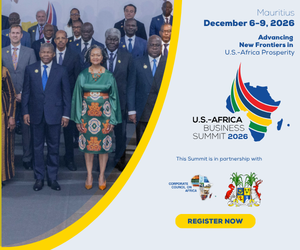
The Board has also endorsed a strengthened programme of international engagement to attract investment, promote exports and deepen business linkages. Key initiatives include participation in the organisation of the US-Africa Business Summit (December 2026), preparations for the EU-Africa Summit 2027, Art Investment Conference, and a series of targeted inward missions in the financial services, education, ICT, healthcare and blue economy sectors.
The EDB will also launch its E-Diaspora Platform to connect at least 3,000 Mauritius professionals abroad to investment, mentoring, and business opportunities locally.
4. Advancing Business Facilitation and Regulatory Reforms
The Board also took note of reforms introduced under the Finance Act 2026 and the Economic and Financial Measures Act 2026, including measures relating to taxation, investment facilitation, clinical trials, student employment permits, FinTech governance and the new AI City Scheme.
The AI City Scheme is expected to position Mauritius as an attractive destination for technology entrepreneurs, AI innovators and strategic investors in digital industries and advanced technologies.
The Board also reviewed progress on the forthcoming Business Facilitation Bill, seeking to introduce the Silent Agreement Principle and streamline business processes. The EDB is currently conducting a comprehensive review of permits and licences to identify administrative bottlenecks and improve regulatory efficiency.
5. Supporting Investment in Healthcare Infrastructure
Two investment projects obtained approval in the nursing and residential care sector, contributing to the expansion of healthcare and elderly care facilities locally to help support the objective of becoming a regional healthcare hub.
6. Promoting the Creative Economy
The Board has approved 2026, further giving impetus to the development of audiovisual and creative projects, namely If I Can Fly, Another Name for Love and Guddan Gupta Tumse. These projects are expected to generate economic activity, generate employment opportunities and enhance Mauritius’ visibility as a film production destination.
7. Expanding Regional Trade and Business Partnerships
The Board approved two strategic international promotional initiatives:
A multisectoral business mission to Ethiopia, Tanzania and Kenya from September 21 to 25 focusing on education, ICT and financial services; and
A SheTrades Hub-to-Hub Collaboration Programme with Madagascar from August 18 to 21, aimed at supporting women-led enterprises and strengthening regional economic cooperation.
8. Accelerating Project Delivery
The Board also reviewed 20 projects, including five projects worth MUR 13.7 billion that have been resolved over the last two months, while 15 projects worth MUR 15.9 billion are being facilitated by the EDB for secondary permits and licences. The EDB will continue to work in tandem with ministries, public agencies and private stakeholders to accelerate project delivery.
9. Enhancing Talent Attraction through Occupation Permit Reforms
The Board also noted significant reforms to the Occupation Permit framework and the continued adoption of the National Electronic Licensing System (NELS). At a glance, Occupation Permit applications increased from 3,710 in 2018 to 10,550 in 2025, reflecting a growing interest in Mauritius as a destination for investment, work and residence.
The reforms simplify permit categories, strengthen eligibility criteria and introduce a new Technical Occupation Permit to support strategic workforce requirements. The updated guidelines will be published on the EDB website.
10. A Stronger Platform for Sustainable Growth
The Board emphasised that the successful implementation of these initiatives will play a critical role in accelerating investment, creating high-value jobs, expanding export opportunities and enhancing the competitiveness of Mauritius. Through a stronger focus on business facilitation, strategic sectors, innovation and international outreach, the EDB aims to contribute meaningfully to sustainable economic growth and support the country’s transition towards a more resilient, inclusive and future-ready economy.