


Mauritius is looking to turn growing international interest in Africa into tangible investment opportunities for the island. This was the central message of a mission led by the Minister of Financial Services and Economic Planning, Dr Jyoti Jeetun, to the United Kingdom and Germany from 19 to 27 October 2026.
The visit combined high-level discussions with international financial institutions, fintech companies and government officials. It also provided an opportunity for Mauritius to reinforce its position as a gateway for investment into Africa, while seeking to remove barriers that continue to limit the use of its financial services sector. In London, the Minister participated in the 13th edition of the Financial Times (FT) Africa Summit, where she joined leading African policymakers and international business figures to discuss the future of finance and the continent’s growth prospects. In Berlin, she called for a review of German restrictions affecting the use of Mauritius to structure certain investments by development finance institutions in Africa.
Financing Africa’s Growth
At the FT Africa Summit, held under the theme “Mobilising Growth in a New Global Order”, Dr Jeetun took part in a discussion on “The Future of Finance”. The event brought together prominent figures, including Ghanaian President John Dramani Mahama, Nigerian industrialist Aliko Dangote and Mo Ibrahim, founder of the Mo Ibrahim Foundation.
The Minister shared the panel with Taiwo Oyedele, Nigeria’s Minister of Finance and Coordinating Minister of the Economy; José de Lima Massano, Angola’s Minister of State for Economic Coordination; and Yvonne Ike, Bank of America’s Managing Director for Sub-Saharan Africa. During a discussion moderated by FT senior journalist Andrew Hill, Dr Jeetun outlined three key approaches to financing Africa’s development: mobilising domestic savings, expanding local-currency borrowing and attracting international capital.
“First, our own resources: our institutional investors, our pension funds and our insurance companies,” she said, highlighting the importance of making better use of Africa’s own financial resources. She also stressed the need to reduce dependence on foreign-currency borrowing, which can expose economies to exchange-rate pressures and make debt repayment more difficult.
“Mauritius is a good example. Borrowing in foreign currencies creates considerable pressure: you have to find those currencies, and our currencies depreciate. This is particularly true for countries like Mauritius, which are heavily dependent on imports.” At the same time, she argued that Africa must do more to attract international investment by addressing the perception of risk associated with the continent.
“Africa is now home to some of the fastest-growing economies in the world. But the perception of risk remains high. We need to attract this global capital while adopting a strategy to reduce the perceived risk.” This, she explained, is where Mauritius can play an important role. With a financial services ecosystem developed over three decades, the country offers international investors a platform through which they can access opportunities across Africa. Mauritius is also one of three African jurisdictions with an investment-grade rating and is the continent’s second-largest financial centre, according to the position outlined during the mission.
Dr Jeetun also used the occasion to challenge the summit’s organisers to bring the event to the continent itself. “This is the second time I have attended this summit. How is it that the FT Africa Summit is not held in Africa? The world needs to come to Africa and see for itself. Come and experience the energy and momentum, see how well our economies are performing and discover the reforms taking place across the continent.”

London Meetings Open Doors to Investment
Beyond the summit, the London programme focused on building relationships with some of the world’s leading financial institutions and professional services firms. The meetings were facilitated by the British High Commission in Mauritius under the UK Government’s Growth Gateway Programme, which supports trade and investment links.
On 19 October, consulting firm BCG brought together several of its major clients for discussions with the Minister. Representatives from HSBC, Mastercard, BlackRock, SCOR Business Solutions, Lloyd’s List Intelligence and the Chartered Institute for Securities & Investment were among those present.
BCG, which has previously contributed to Mauritius’s Vision 2050, also expressed its willingness to support the Government’s ambition to make financial services the country’s largest contributor to gross domestic product by 2050.
The following day, Dr Jeetun attended the UK–Mauritius Investor Engagement Round Table, organised by Invest Africa and the British High Commission. The meeting brought together representatives from Bank of America, BlackRock, KPMG UK, HSBC, MUFG, LSEG, Africa50 and British International Investment. Discussions centred on investment opportunities in Africa and the role Mauritius could play in connecting international capital with projects across the continent. Ben Aisely, the UK Trade Commissioner for Africa, travelled from South Africa to participate.
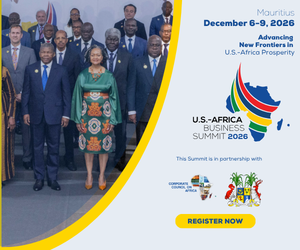
The meetings also generated interest in the US–Africa Business Summit, scheduled to take place in Mauritius in December. Wealth management was another area of focus. SABLE International, which already operates in Mauritius, welcomed the possibility of establishing its global headquarters on the island. Such a move would strengthen Mauritius’s efforts to attract international firms seeking a base from which to serve clients across different markets.
Fintech and Digital Payments in Focus
The mission also sought to position Mauritius as a competitive destination for fintech businesses, particularly those looking to expand across Africa and Asia. Dr Jeetun met executives from major international fintech companies and representatives of techUK, an organisation representing more than 100 technology companies. Discussions covered the country’s National Fintech Strategy 2026–2030, the development of digital payments and the opportunities available to companies seeking to establish a regional presence in Mauritius.
One of the companies that expressed interest was Revolut, the global fintech firm with more than 70 million customers. Discussions focused on the possibility of establishing a digital bank in Mauritius, including the regulatory requirements of the Bank of Mauritius and the country’s fintech passporting framework. International money transfer company Wise also expressed an interest in expanding into Mauritius. Meanwhile, The Payments Association, which represents businesses operating in the payments sector, viewed the prospect of establishing a local presence favourably.
For Mauritius, attracting such companies would bring more than just new business. It could also support innovation, create employment opportunities, strengthen the digital financial services ecosystem and improve access to international markets. Cyber resilience and security standards featured prominently in the discussions, alongside the wider opportunities offered by Mauritius as a business location. Several companies requested additional information and began exploring the steps required to establish operations on the island.

Mauritius Seeks a Change in Germany’s Approach
The mission concluded in Germany, where Dr Jeetun met State Secretary Dr Rolf Bösinger at the Federal Ministry of Finance in Berlin on 26 October. The discussions addressed restrictions that have affected the use of Mauritius by German development finance institutions seeking to structure investments in Africa, particularly through KfW.
Germany’s cautious approach followed Mauritius’s inclusion on the Financial Action Task Force (FATF) grey list. Although Mauritius was removed from the list in October 2021, the restrictions have continued to affect the country’s ability to serve as a structuring jurisdiction for certain investments. Dr Jeetun called for these restrictions to be reconsidered, pointing to the reforms undertaken by Mauritius since its removal from the grey list and the progress made in strengthening its regulatory and compliance frameworks.
The meeting was constructive, with Dr Bösinger expressing his willingness to support a review of the matter. Both sides also identified three potential areas for closer cooperation: finance, climate and tourism.
A review of the restrictions could help restore confidence in Mauritius’s role as a financial intermediary for investment into Africa, particularly where development finance institutions are involved. However, any change will depend on the outcome of the review and the relevant German authorities’ decisions.
Addressing Concerns About Mauritius
The FT Africa Summit also provided an opportunity to address questions about recent unrest in Mauritius, an issue raised by moderator Andrew Hill during the discussion. Dr Jeetun linked the situation to the economic pressures affecting households, particularly the rising cost of living and the country’s reliance on imports. She also highlighted the impact of the severe drought affecting the island. “Like every country in the world, we are grappling with a cost-of-living crisis. Countries like Mauritius depend on imports. We are being hit hard. Mauritius is also currently experiencing the worst drought we have ever known.”
She also pointed to the way communities had responded to the situation, noting that “a kind of neighbourhood watch organised itself naturally”. The Minister sought to distinguish the economic difficulties faced by the population from the violence that had taken place, adding that calm had returned within a matter of days. “Calm had truly returned and, thank God, we are back to normal.”
The exchange offered an opportunity to present the Government’s perspective on the events while acknowledging the economic and social pressures experienced by Mauritians.