


As Mauritius faces growing electricity demand and the challenge of accelerating its energy transition, international energy leaders, investors and policymakers will gather in Mauritius from 6 to 9 December to explore energy security, infrastructure investment and new business partnerships across Africa.
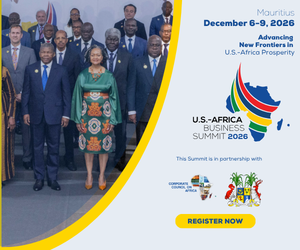
With electricity demand continuing to rise in Mauritius and across Africa, energy security, investment and access to reliable power will be among the key priorities at the 18th U.S.-Africa Business Summit, taking place in Mauritius from 6 to 9 December 2026.
The discussions come at a particularly relevant time for Mauritius. According to figures published on the Central Electricity Board’s (CEB) website, peak electricity demand reached 567.9 MW on 5 February 2025, approximately 8% above the 2024 peak of 525.7 MW. Meeting growing demand while advancing the country’s transition towards cleaner energy will require investment, new technologies and reliable infrastructure.
Across Africa, growing industries, expanding cities and the development of digital infrastructure are increasing the need for affordable and dependable electricity.
Organised by the Corporate Council on Africa (CCA) in partnership with the Government of Mauritius, the Summit will bring together African Heads of State, ministers, American and African business leaders, investors and industry experts to explore how international partnerships can help address these challenges.
International energy leaders to discuss Africa’s energy future
Among the energy leaders expected at the Summit is Mr Thomas R. Hardy, Deputy Director of the U.S. Trade and Development Agency (USTDA), a U.S. government agency supporting infrastructure development and commercial partnerships.
In an interview published by CCA on 19 February 2026, Mr Hardy highlighted opportunities for American investment in Africa’s energy sector, including gas and gas-to-power projects. He stressed the importance of bringing governments and businesses together to connect infrastructure needs with technology, expertise and investment.
“The U.S. Trade Development Agency helps to bring projects to financial close by convening American companies, American technology providers, and engineering firms with the African developers,” he explained.
Mr Hardy cited the Lobito Corridor as an example of how infrastructure connecting several countries can strengthen supply chains by bringing critical minerals and other goods to market while supporting electricity access for towns and villages. He described it as a model that could be replicated and highlighted CCA’s role in bringing together companies and partners to support investment in Africa.
Also confirmed is Mr Adam Cortese, CEO of Sun Africa, an international energy infrastructure company and member of CCA’s Board of Directors. In a previous video interview with CCA, Mr Cortese highlighted the organisation’s role in helping American businesses and African governments better understand each other’s expectations around investment. He cited Sun Africa’s US$2.4 billion integrated infrastructure transaction in Angola, for which CCA arranged the signing of loan documentation at the Summit in Dallas. Bringing the necessary stakeholders together around the event helped move the transaction forward, he explained.
“I’m not sure that we would have gotten this over the finish line in that time period without CCA,” Mr Cortese said. At the Mauritius Summit, Mr Cortese is scheduled to participate in the high-level dialogue, Africa’s Energy Future: Expanding Access, Fueling Growth, and Securing Supply, on 7 December. The session will examine how African economies, including Mauritius, can expand electricity access, strengthen energy security and attract investment to support industrial and economic development.
Energy roundtables to explore investment and practical solutions
The Summit programme includes several dedicated energy discussions. On 7 December, a specialised roundtable entitled Building Reliable and Bankable Gas Powered Energy Systems in Africa will examine the financing structures, investment conditions and partnerships required to develop reliable energy infrastructure.
A further panel on 8 December, Critical Power: Advancing U.S.-Africa Nuclear Energy Partnerships for the 21st Century, will explore nuclear energy technologies and the investment and regulatory frameworks required for their development.
Together, these discussions will address a central challenge: how to transform Africa’s growing energy requirements into commercially viable projects capable of attracting investment and delivering reliable electricity.
What opportunities for Mauritius and its businesses?
For Mauritius, these discussions are particularly relevant as the country seeks to strengthen its energy security, modernise infrastructure and accelerate its transition towards cleaner electricity generation. They also offer opportunities for Mauritian companies to explore partnerships beyond the domestic market. Energy infrastructure projects require expertise in engineering, financial services, project management, technology, legal services and advisory work. Mauritian businesses operating in these sectors could potentially contribute to projects across African markets.
Mauritius’s established financial services sector could also play a role in structuring and financing regional energy investments.
While the Summit will address investment opportunities across Africa, rather than projects exclusively benefiting Mauritius, hosting the event will provide local businesses with direct access to international investors, project developers and potential commercial partners.
For Mauritian companies seeking to expand their regional presence, the Summit offers an opportunity to understand emerging energy priorities, establish relationships and explore partnerships that could extend beyond the event itself.
The 18th U.S.-Africa Business Summit will take place at the Swami Vivekananda International Convention Centre from 6 to 9 December 2026.