


Mauritius may be a small island on the map, but in the emerging digital economy, its ambitions could stretch far beyond its shores. For Marcelo Aleman, Chief Executive Officer of Emtel, the island has the potential to become a strategic gateway connecting the United States to Africa and, increasingly, to Asia.
It is a vision he will take to the international stage at the U.S.-Africa Business Summit in December, but one he is already putting into practice at Emtel.
Speaking to journalists at a media brunch held at the Emtel Academy in Ebène on Wednesday, 25 November 2026, Mr Aleman outlined why he believes Mauritius is well positioned to become a regional centre for digital investment, innovation and technology. His message was clear: the opportunity is considerable, but realising it will require more than infrastructure. It will take people, ambition, partnerships and the willingness to embrace change. A Bolivian national with 25 years of experience in telecommunications and technology across Africa, Latin America and Central America, Mr Aleman took over as CEO of Emtel in March. Asked what had drawn him to Mauritius, he offered an unexpected answer: “I think Mauritius chose me.”

A small island with a continental ambition
The starting point for his argument is a striking imbalance in the global digital landscape. Africa accounts for nearly a fifth of the world’s population, yet holds just 0.6% of global data-centre capacity, according to the World Bank’s October 2026 Africa Economic Update. For Mr Aleman, this gap represents an extraordinary investment opportunity. As demand for computing power, cloud services, data storage and artificial intelligence continues to grow, capital will inevitably seek markets where digital infrastructure is still underdeveloped. The question is which countries will be ready to attract it.
He believes Mauritius can position itself at the centre of that opportunity. Drawing a comparison with Singapore, which transformed itself into a major Asian logistics and business hub some 60 years ago, he sees a similar opportunity for Mauritius in the digital age. Its geographical position, business environment and existing infrastructure could allow it to serve as a launchpad for companies looking to access markets across Africa and parts of Asia. “I like to see Mauritius as a magnifying glass to reach Africa,” he explained. The proposition is simple but compelling. An American technology company establishing a presence in Mauritius would not be looking solely at the island’s domestic market. It would be investing in a base from which to reach a much larger continent.
Beyond infrastructure, the power of people
Yet Mr Aleman is quick to point out that technology alone will not make Mauritius a digital powerhouse. Data centres, submarine cables, servers and computing capacity are essential, but the real differentiator, in his view, is the quality and adaptability of the people who use them.
Mauritius already has an important advantage: an educated population, a largely trilingual workforce and a society that has become increasingly comfortable with digital services, from mobile banking to online transactions. For him, this human dimension is what could set the country apart. “Infrastructure is important, but the most important part is the mindset. Mauritius is building the roads. Now we need a lot of cars on them, and those cars are the people.” It is a reminder that building a digital economy is not simply about laying cables or constructing data centres. It is about developing the skills, confidence and curiosity needed to turn technology into productivity, innovation and new business opportunities.

Artificial intelligence: less hype, more application
Artificial intelligence may dominate conversations across the business world, but Mr Aleman believes its real value lies not in the excitement surrounding it, but in how effectively people learn to use it. He sees AI as a practical tool capable of transforming everyday work, provided organisations are prepared to experiment, learn and integrate it into their operations.
In his assessment, curiosity and daily practice account for 70% of success. The technology is increasingly accessible; the difference comes from knowing what to ask, how to use the answers and how to translate them into meaningful results. “If you can prompt it, you can build it.”
At Emtel, this philosophy is already taking shape. A short film presented during the brunch showcased employees using AI tools to analyse network logs and review 350 lease contracts, illustrating how tasks that once required considerable time and manual effort can now be handled more efficiently. The same thinking extends to the company’s customers. For merchants using blink, Emtel has developed a simple AI-powered tool that reconciles daily sales in minutes rather than hours. These examples reflect a broader vision of AI as an enabler rather than a replacement for human capability. By automating repetitive processes, employees can devote more time to higher-value responsibilities, improve decision-making and focus on the work that requires human judgement.
But Mr Aleman also draws a firm line when it comes to accountability. “Anybody using these tools is responsible for the results.” For him, embracing artificial intelligence does not mean surrendering responsibility to technology. It means using it intelligently while retaining human oversight.
Building the backbone of Mauritius’s digital future
If Mauritius is to become a regional digital hub, it will need a strong and reliable technological foundation. This is where Emtel sees itself playing a central role. “We are proud to say we are building the Mauritius digital backbone.”
The company has made significant investments in infrastructure that support its ambition. Its data centre in Arsenal was the first in Mauritius to obtain TIA-942 Rated 3 certification and remains the only one connected to all three submarine cables serving the company. In partnership with Eutelsat, Emtel also established the first OneWeb satellite ground station in the Indian Ocean. It was also the first operator in Mauritius to offer GPU-as-a-Service through its sovereign cloud.
These milestones reflect a company that is increasingly looking beyond traditional telecommunications. Under Mr Aleman’s leadership, Emtel is pursuing a strategic transformation from a telecommunications operator into a broader technology company. The reasoning is straightforward: connectivity, once a competitive differentiator, is increasingly becoming a basic utility. The next wave of value will come from the services, platforms and solutions built on top of it. That includes digital payments through blink, cloud computing, data-centre services and cybersecurity solutions offered to businesses through Emtel Business.
The transformation is also reflected in the company’s internal culture and approach to innovation. “Trust is the way we behave; speed is how we execute.” When it comes to software development, the company follows a clear philosophy: build solutions in-house wherever possible, turn to white-label products when necessary, and purchase licences only as a last resort. It is an approach that gives Emtel greater control over its technology while allowing it to develop solutions that respond directly to the needs of its customers.
Technology that makes a difference in everyday life
For Mr Aleman, however, technological progress is meaningful only when customers can feel its benefits. Rather than developing products simply because the technology exists, Emtel’s teams begin by understanding the problems businesses and individuals are trying to solve. From there, they work towards building solutions that are practical, relevant and tailored to specific needs.
The company is also preparing to introduce a web-based self-care portal, which will allow customers to manage their accounts entirely online. Once launched, the platform will make it possible to carry out everyday account-related activities without having to contact the call centre or visit an Emtel shop. It is a relatively simple example of digital transformation, but one that speaks to a much bigger objective: making technology work for people, rather than asking people to work around technology. “We are using technology to facilitate our work,” Mr Aleman observed, “but the ultimate objective will always be to facilitate our customers’ lives.”
The company’s financial performance provides a solid foundation for this transformation. For the nine months ended September 2026, Emtel recorded an 8.8% increase in revenue to Rs3.23 billion, while profit after tax from continuing operations rose by 29.9% to Rs488 million.
The challenges behind the ambition
Despite his optimism, Mr Aleman recognises that turning Mauritius into a regional digital hub will require the country to address several important challenges. Among the most pressing is energy. Data centres are power-intensive facilities, and any country hoping to attract large-scale digital infrastructure investment must be able to provide reliable, affordable and increasingly clean electricity. For Mauritius, solar energy offers an obvious opportunity. With its abundant sunshine, the island has considerable potential to develop renewable energy solutions that could support the expansion of its digital infrastructure. But this will require coordination between government and the private sector, particularly when it comes to making suitable land available and planning for the energy demands of future investments.
Regulation is another important consideration. As more international companies look to store, process and manage data in Mauritius, the country will need a framework that protects data sovereignty and builds trust without creating unnecessary barriers to innovation. The direction of public policy is encouraging. The 2026-27 national budget, with its emphasis on digital transformation and incentives for data-centre development, suggests that the government’s priorities are broadly aligned with the opportunities Mr Aleman describes.
Taking Mauritius’s digital ambitions to the world
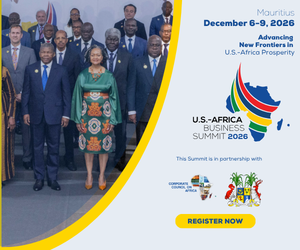
The timing of Mr Aleman’s message is particularly significant. For the first time, Mauritius will host the U.S.-Africa Business Summit, organised by the Corporate Council on Africa, from 6 to 9 December 2026. Emtel, alongside the Currimjee Group, is participating as a Silver Sponsor. On Tuesday, 8 December, from 9:30 a.m. to 10:45 a.m., Mr Aleman will join an international panel entitled “The AI Frontier: Accelerating U.S.-Africa Innovation, Investment, and Growth”. According to the summit’s programme, the discussion will bring together ministers from Nigeria and South Africa, alongside representatives of OpenAI, Google Cloud and the U.S. Department of State.
It will be an opportunity to position Mauritius within a much larger conversation about the future of artificial intelligence, digital infrastructure and investment across the African continent. For Emtel, the summit is not simply an occasion to showcase its technological capabilities. It is an opportunity to build relationships, attract partnerships and demonstrate what Mauritius can offer international businesses looking to expand into Africa.
Mr Aleman’s ambitions, however, extend beyond the company he leads. “We are here to do business, but we also want to contribute to the country and be Mauritius’s partner in building its digital economy.” It is perhaps the most important message to emerge from the discussion. Mauritius does not need to compete with the largest economies in terms of size or population. Its opportunity lies in being agile, connected, trusted and strategically positioned.
The island has already built much of the foundation. It has the infrastructure, the talent, the geographical advantages and an increasingly supportive policy environment. What comes next will depend on how effectively these strengths are brought together. For Mr Aleman, the ambition is not merely to connect Mauritius to the world. It is to make Mauritius a place from which the world can connect with Africa.