

By Shruti Menon Seeboo
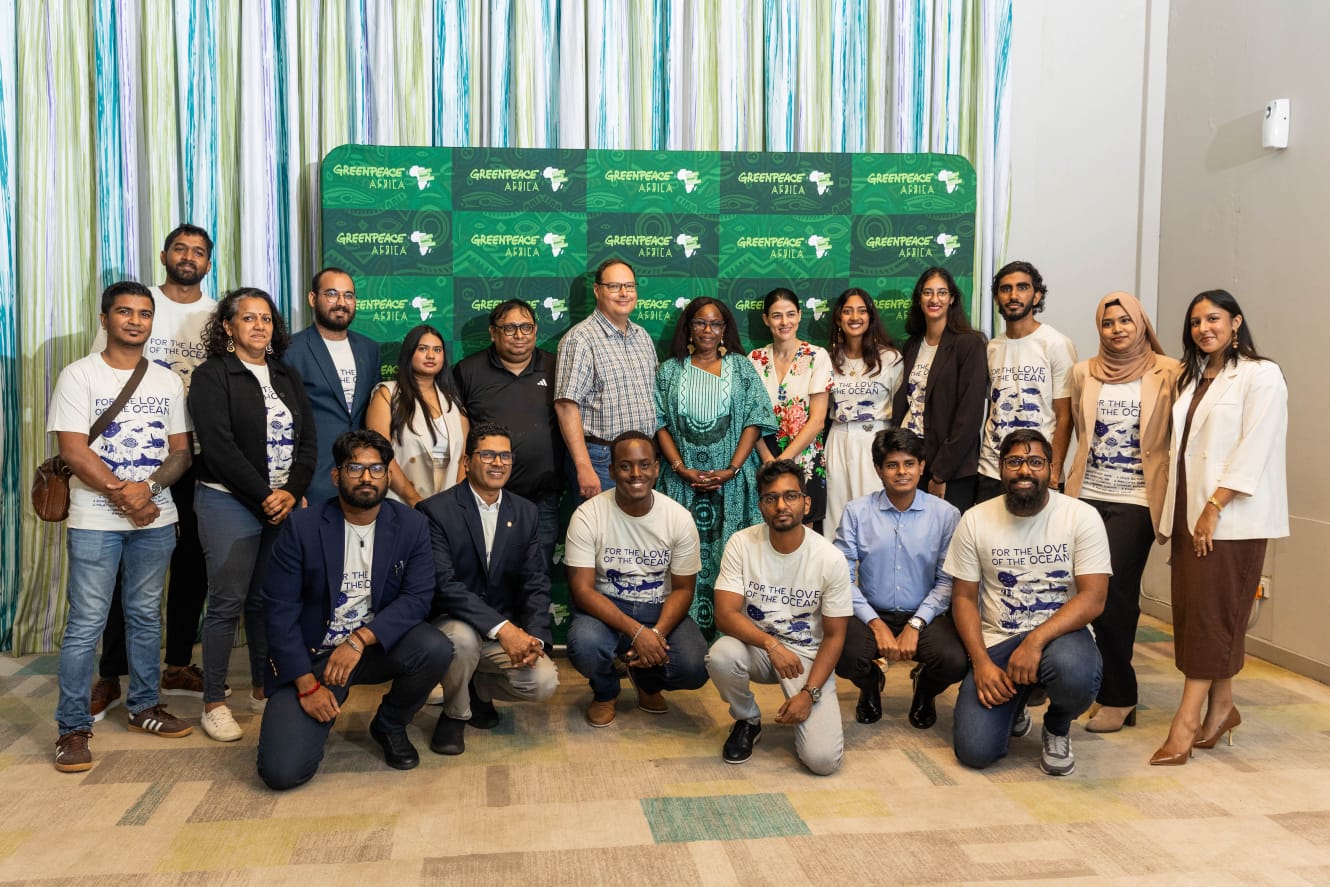
The date of Wednesday, 14 January 2026, will be etched into the annals of maritime history as the moment the tides of global ocean governance shifted decisively toward the Global South. In the heart of the Ebène cyber-city, the official launch of the Greenpeace Africa Foundation’s Mauritius office served as more than just a ribbon-cutting ceremony; it was a geopolitical statement. This landmark event coincided precisely with the entry into force of the United Nations High Seas Treaty, also known as the BBNJ Agreement (Biodiversity Beyond National Jurisdiction). For a nation like Mauritius, where the blue economy and marine ecosystems contribute more than one-third of the national GDP, the synergy between a new regional environmental hub and a historic global treaty represents a shield against the rising pressures of climate change and industrial exploitation.
The establishment of this office positions Mauritius as the organisation’s strategic Indian Ocean hub. It brings to the local and regional table a suite of sophisticated tools: international legal expertise tailored to the new Ocean Treaty, forensic investigation capabilities to track illegal activities at sea, and a global media platform designed to amplify Mauritian and regional voices on the world stage. As the island nation grapples with the dual realities of economic dependence on the sea and the ecological fragility of its waters, the arrival of Greenpeace Africa signals a shift from passive observation to active, investigative stewardship.
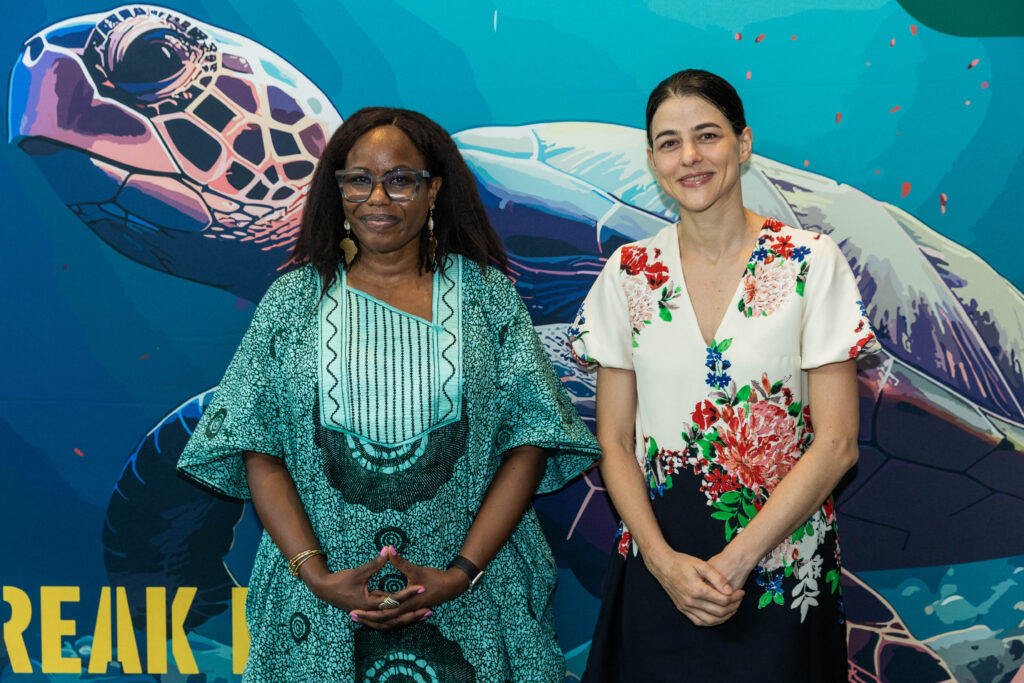
A Mandate of Leadership: Amplifying the African Voice in Marine Governance
The keynote address delivered by Dr Oulie Keïta, Executive Director of Greenpeace Africa, set a profound tone for the organisation’s mission in the region. Eschewing the traditional language of international NGOs, Dr Keïta framed the expansion as a homecoming and a partnership of equals. She began by grounding her presence in a shared identity, stating, “I stand before you today not as a stranger, but as an African sister. I am deeply honoured to be welcomed to this island which has given so much to the world, and which still has so much to teach it.” This sentiment of mutual respect was the cornerstone of her allocution. Dr Keïta was quick to acknowledge that Mauritius has long been a pioneer in environmental policy, independent of external influence. She noted, “Let us be clear, Mauritius has not waited for Greenpeace. Your institutions have put in place some of the most progressive legal frameworks in Africa, whether regarding the fight against plastic pollution, marine protection, or the development of a sustainable blue economy. Your environmental defenders, your fishers, your young activists have been fighting for generations to preserve what your ancestors entrusted to you.”
Consequently, the role of the new Mauritius office is not to impose foreign agendas, but to provide the technical scaffolding for local initiatives. Dr Keïta outlined a philosophy of service that departs from old-fashioned environmental paternalism: “We do not come here to teach, but to learn. We do not come to lead. We come to accompany. We do not come to save. We come to serve. Because Greenpeace Africa is an African organisation, led by Africans and guided by African realities. And because we know that the strength of our movement lies in solidarity, never in sterile confrontation.”
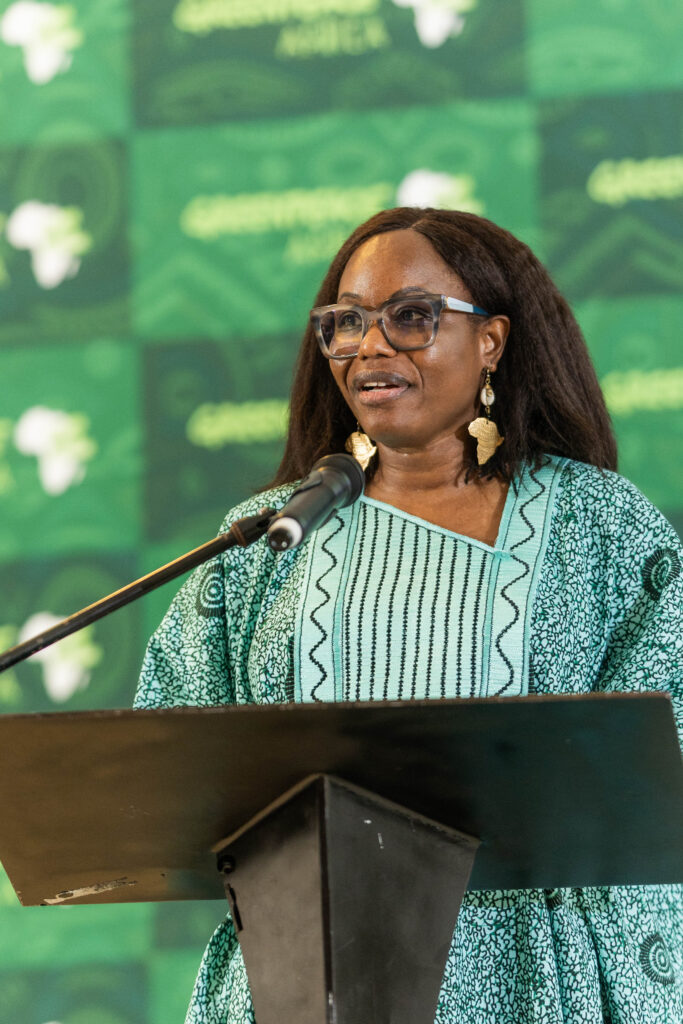
The timing of the launch is particularly poignant given the legal evolution of the Indian Ocean’s geography. With the restoration of sovereignty over the Chagos Archipelago, Mauritius has seen its responsibilities as a “large ocean state” expand exponentially. Dr Keïta highlighted this transition as a pivotal moment for regional leadership. “You are an ocean state,” she told the assembled dignitaries. “Your jurisdiction extends over marine spaces upon which millions of lives depend. With the return of sovereignty over the Chagos Archipelago, you become the custodians of one of the largest and most precious marine protected areas on the planet. This is not a burden. It is a mandate of leadership.”
This leadership is now bolstered by the BBNJ Agreement, which Dr Keïta identified as a transformative tool for small island developing states (SIDS). The treaty allows for the creation of marine protected areas in the “High Seas”—the vast reaches of the ocean that previously existed in a state of legal limbo. Specifically, Dr Keïta pointed to the Saya de Malha Bank, the largest seagrass meadow on Earth, as a primary beneficiary. She remarked, “The Saya de Malha Bank, the largest underwater meadow on the planet and an ecological treasure of inestimable value, can finally be protected. This treaty gives Mauritius and island states the power to say no. No to destructive exploration. No to harmful industrial fishing. No to decisions taken by distant powers over waters that belong to you by right.”
A Symphony of Governance: Bridging Policy and Grassroots Advocacy
The presence of the Honourable Joanna Marie Bérenger, Junior Minister for Environment, Solid Waste Management and Climate Change, underscored the Mauritian government’s recognition of environmental protection as a collaborative endeavour. Her address moved beyond mere diplomatic pleasantries, offering a nuanced vision of how a state and a global watchdog can coexist. Minister Bérenger was unequivocal in her praise for the organisation’s track record, stating, “I would like, first of all, to address my most sincere congratulations to the entire Greenpeace Africa team for its constant, courageous, and structuring commitment to the protection of the environment, both on the African continent and beyond its borders.” She acknowledged that for decades, the NGO’s ability to “alert, mobilise, scientifically document, and carry complex causes onto regional and global stages” has been instrumental in keeping environmental issues at the heart of public debate.
For the Minister, the decision to anchor this new hub in Mauritius was a strategic alignment of necessity and symbol. She painted a vivid picture of the vulnerabilities facing the island, noting that Mauritius is “particularly exposed to the impacts of climate change, whether it be coastal erosion, rising sea levels, the degradation of coral reefs, or the growing pressures on our natural resources.” She stressed that these are not distant threats but immediate realities. “The establishment of Greenpeace Africa in Mauritius reinforces this dynamic and consolidates our position as a space for dialogue and cooperation at the service of the Indian Ocean and the African continent,” she remarked.
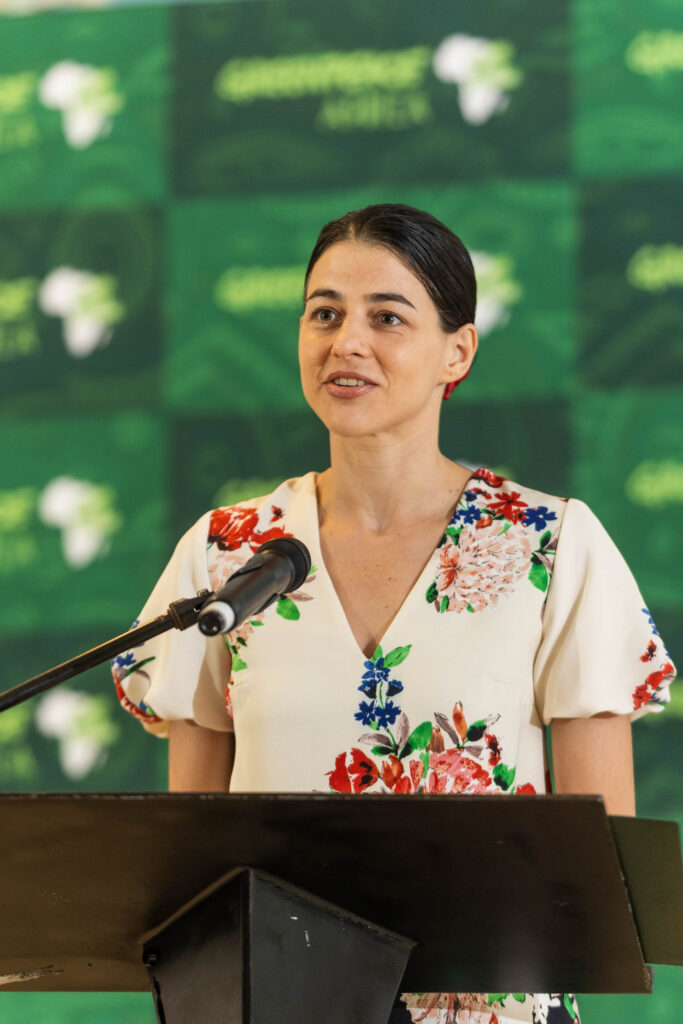
Perhaps the most striking element of the Minister’s speech was her candid reflection on the relationship between the state and civil society. Minister Bérenger was careful to manage expectations regarding total consensus. “We do not expect NGOs to be systematically in agreement with all the decisions taken by the Ministry,” she admitted. “Disagreement is an integral part of democratic debate. But as long as dialogue, good faith, humility, and trust remain at the heart of our exchanges, then balanced solutions, beneficial to both Mauritians and the planet, remain possible.”
The Minister expressed a keen interest in the technical assets Greenpeace Africa brings, specifically in terms of scientific research and data production. “This expertise can usefully contribute to enriching the development of public policies, strengthening their credibility and impact, and nourishing strategic reflection on sustainable development trajectories at the national and regional scale,” she explained. By positioning the new office as a bridge between the African continent and SIDS, the Minister concluded that this partnership is a vehicle for regional leadership: “May you find in Mauritius a space conducive to work, reflection, and action, in the service of our island, our region, and our planet.”
Rapid Response and Regional Resilience: The Frontlines of Climate Crisis
The strategic logic behind choosing Mauritius as a hub was further elucidated by Shumirai Zizhou, a Responsive Campaigner for Greenpeace Africa. A lawyer by profession who transitioned from the corporate world to the development sector, Zizhou’s role focuses on the “cross-cutting campaign pillar,” dealing with emerging crises that fall outside planned strategic cycles. Her perspective grounds the high-level policy in the gritty reality of environmental disasters. “I work on things that fall outside of the strategic and planned campaign pillar perspective, but things that can happen at any time, which we are seeing a trend. So, a hurricane, a cyclone, things like that are what my campaign deals with,” Zizhou explained. She cited her experience with the South African water pollution crisis and the Maasai evictions as examples of the rapid-response work that the Mauritius office will now facilitate in the Indian Ocean.
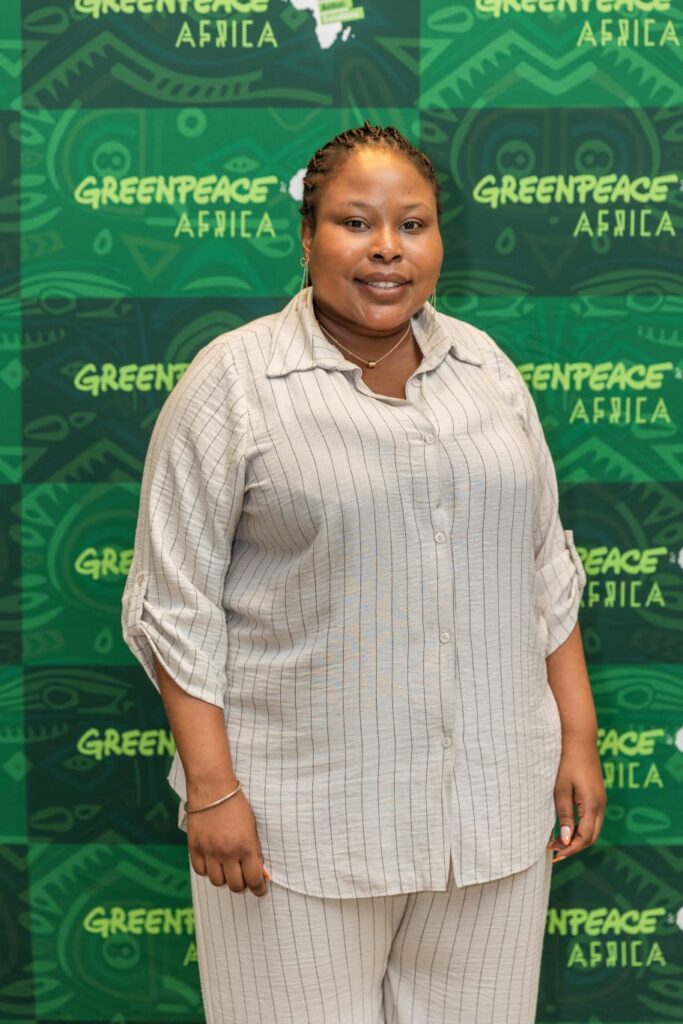
When asked why Mauritius was specifically selected among the various Indian Ocean islands, Zizhou pointed to the nation’s existing legislative maturity and its geographical connectivity. “Mauritius is part of the SADC community and it is a part of the continent and it made no sense for us to have this ocean campaign that doesn’t cover the island countries,” she noted. “We noted that Mauritius had already put in some very important legislations. For example, the single-use plastics banning… Also, Mauritius signed on to the High Seas Treaty, which was really big for us because we were campaigning on it as well.” This location allows Greenpeace to foster closer ties with neighbouring island nations like the Seychelles, particularly in areas where shared waters—such as the Joint Management Area of the Mascarene Plateau—require harmonised environmental standards. Zizhou highlighted that once the presence is solidified, the focus will turn to legislative collaboration: “You guys share a lot of marine life and the same body of water as well… where time and capacity allowed, definitely.”
Her message to the local youth and “eco-warriors” was a clarion call for immediate action, rejecting the notion that the younger generation must wait for their turn to lead. “I would tell them that they often tell us that the youth are the future and I would tell them that’s actually simply wrong. The youth are the now,” she asserted. “We really cannot wait on the global north or our leaders to do everything for us. We need to take the initiative into our own hands. Our ancestors had their own fight and let’s make the climate crisis our fight.”
From Policy to Protection: Deploying the Tools of Ocean Justice
While the philosophical and social frameworks were established, the technical reality of the mission was brought into sharp focus by Dr Aliou Ba, Oceans Campaign Lead. For Dr Ba, the entry into force of the BBNJ Agreement this week provides the legal “teeth” necessary to protect the Indian Ocean. “For the first time, we have a legal mechanism to challenge deep-sea mining and hold governments accountable for what happens beyond their territorial waters,” he stated. The Mauritius office is not merely a regional branch; it is a pilot for the entire continent. “Mauritius gives us a platform to pilot Treaty implementation strategies that we can replicate across the Western Indian Ocean and beyond. What we learn here scales continentally.”
This strategic implementation was mirrored by a cultural activation at the Port Louis Waterfront, where the public was invited to engage with the cause through art. Mauritian muralist Daphne Doomun unveiled an artwork designed to mobilise support for marine sanctuaries, reminding the public that the ocean’s health is intrinsically linked to Mauritian identity and survival.
As the sun set over Ebène and Port Louis, the message of the launch was unmistakable. The establishment of Greenpeace Africa’s Mauritius office, coinciding with the historic High Seas Treaty, has fundamentally altered the power dynamics of regional ocean governance. With the blue economy representing over one-third of the nation’s GDP, the stakes are existential. Through a combination of legal expertise, forensic investigation, and a commitment to “the African way” of solidarity, Mauritius and its new partners have embarked on a journey to ensure the Indian Ocean remains a source of life and wealth for the “now” and for the generations to follow.