

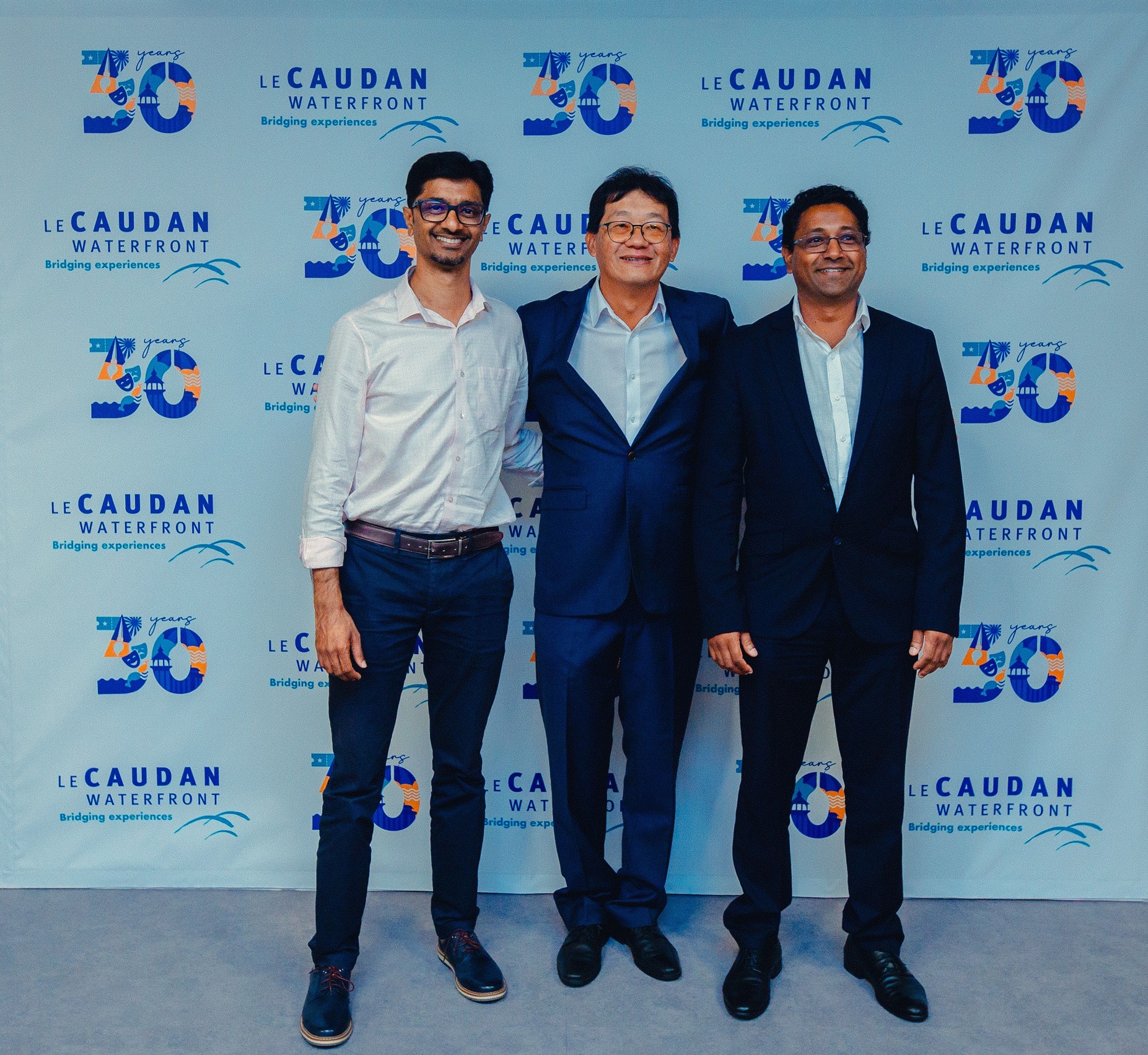
Thirty years ago, the edge of Port Louis was a landscape of rust and salt—a functional, industrial frontier where the capital met the Indian Ocean. It was a place of transit: of sugar, textiles, and toil. But on 24 November 1996, the city held its breath as a new silhouette emerged on the quays of the old port. The inauguration of the Caudan Waterfront didn’t merely open a collection of shops; it performed a feat of urban alchemy, transforming a rugged dockland into a sophisticated “place of life.”
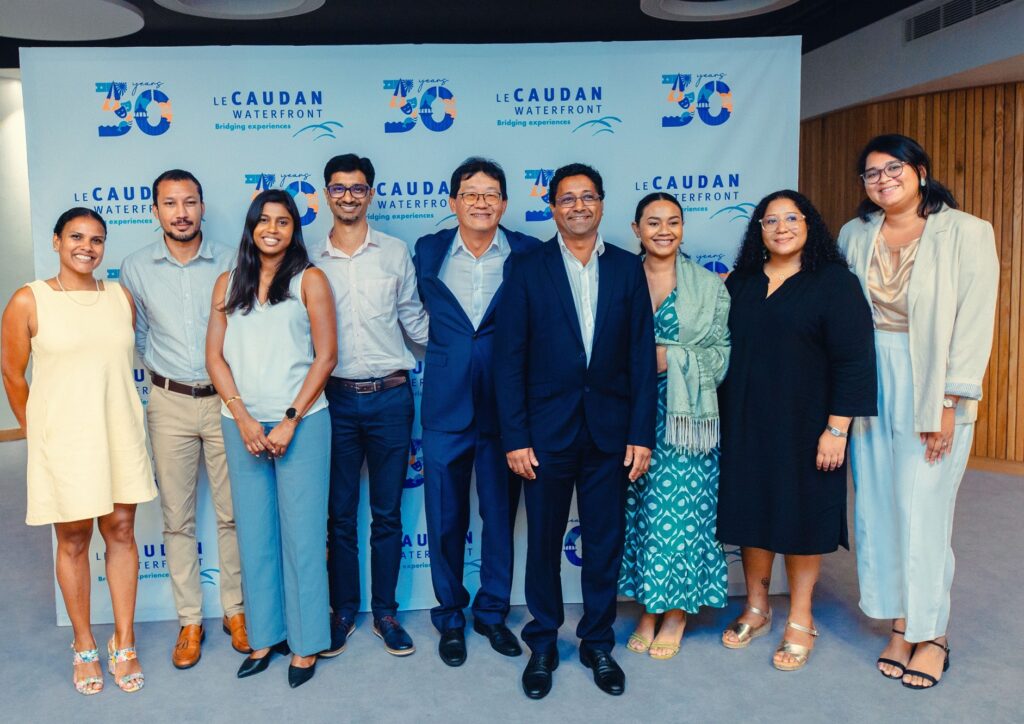
As we stand in March 2026, the Caudan has surpassed its status as a commercial pioneer to become a shared heritage. It is the “beating heart” of the capital, a space where the rigorous pace of the business district softens into the rhythmic lapping of the marina. To celebrate this landmark three-decade anniversary, the management of the Caudan gathered the press on Monday, 16 March, at the Caudan Arts Centre to pull back the curtain on a year of festivities, artistic creation, and reflection.
The Architecture of Connection
The Caudan’s longevity is no accident of geography. It is the result of a singular architectural vision that understood that for a space to survive thirty years, it must possess a soul. By respecting the basalt stone of the old colonial structures while introducing a modern aesthetic, the Caudan avoided the sterile, “anywhere-in-the-world” feel of many modern shopping malls. Instead, it felt immediately familiar to Mauritians.
Addressing a room filled with journalists and the tenants who breathe life into the quays every day, Krishen Veerapen Chetty, Asset Manager at Caudan Development, underscored the symbiotic relationship between the site and the stories told about it.
“Your presence is vital to us,” Chetty remarked, acknowledging the media’s role in documenting this three-decade voyage. “The media has always played an essential part in narrating the evolution of Caudan and sharing this story with the people of Mauritius. What began as an ambitious project to breathe new life into the capital’s seafront has, over the years, become far more than a commercial centre. Today, the Caudan Waterfront is a sanctuary of encounter, culture, and sharing—a space where Mauritians, expatriates, and tourists alike converge to experience the city through a different lens.”
As Asset Manager, Chetty views the site not merely as a portfolio of square footage, but as a cultural trust. He noted that the site’s mission to promote art and culture was solidified by key milestones: the opening of the Blue Penny Museum in 2001 and the Caudan Arts Centre in 2018. These were not just business expansions; they were declarations of intent.
“My role—alongside the entire team—is precisely to ensure that this place continues to live, to transform, and to remain relevant, all while preserving the identity that makes Caudan a unique fixture in Port Louis,” Chetty explained. “This 30th anniversary is a significant juncture. It is a moment to look back at the path we have travelled, but also to project ourselves into the future. We have designed an entire year of celebrations and cultural initiatives to allow the public to rediscover Caudan anew.”
The Merchant of Memories
To understand the magnitude of the Caudan’s impact, one must remember the retail landscape of the mid-nineties. Before 1996, the island’s commercial pulse was fledgling, restricted largely to the Continent hypermarket in Phoenix. The Caudan arrived as the country’s first genuine “mixed-use” destination—a concept that many at the time viewed with a raised eyebrow.
Dean Lam, Chief Executive Officer of Promotion and Development Limited, remembers the era vividly. “I had only just returned to Mauritius in 1996,” Lam recalls. “I remember that some were deeply sceptical; they were convinced the project would not succeed. Fortunately, they were mistaken. Not only did it thrive, but it profoundly influenced the consumption and leisure habits of all Mauritians. It became a heritage site, a pioneering space imagined for locals and tourists alike.”
Today, the Caudan has achieved the ultimate brand accolade: it has become a proper noun for an entire district of the city. As Lam points out, the public no longer distinguishes between the complex and the surrounding urban fabric. People speak of the “Caudan Metro” as naturally as they speak of the harbour itself.
Despite the fierce competition from newer, larger malls across the island, the Caudan retains an “affective bond” with its visitors that cannot be replicated by glass and steel alone. For Lam, the Waterfront is a champion of the “Made in Moris” movement and a vital platform for SMEs.
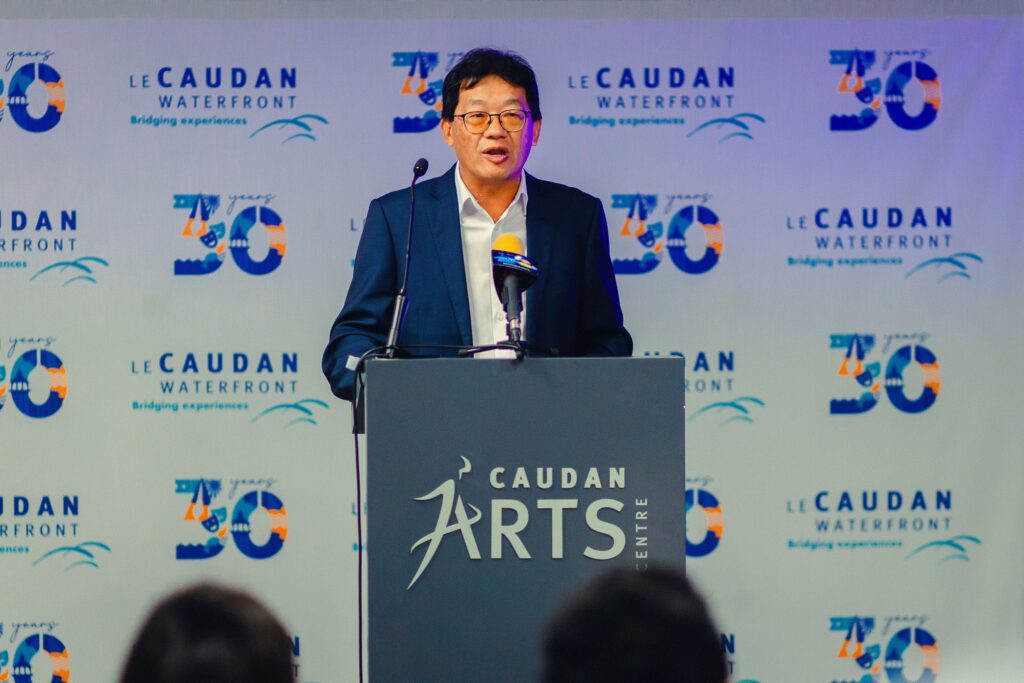
“Our ambition is to position Caudan even more firmly as a place associated with heritage and local products. While we may not always compete on the sheer number of shopfronts, we offer a dynamic of life that is unparalleled. You see young people filming TikToks, international film crews capturing scenes, and professionals relaxing by the water after a day in the office. It is not just a product; it is a neighbourhood where Mauritian culture is lived.”
Lam’s personal connection remains as strong as his professional one. “Long before I worked here, I came here often with my family. Even today, my favourite moment is the late afternoon, simply contemplating the sea. This 30th anniversary isn’t just a celebration of the past; it’s the ‘kick-off’ for a new phase. We are envisioning a ‘revamping’ of the site that will give a fresh impetus not just to Caudan, but to the entire capital.”
The Guardians of the Quay: Thirty Years of Entrepreneurial Spirit
The true soul of the Caudan is found in the shops and the stories that have matured alongside it. For many, the Waterfront is more than a business address; it is a repository of shared Mauritian history. Ginny Lam, Director of Bookcourt, reflects on when her father, André Lam, took the audacious step of opening a bookstore here three decades ago.
“Our history has been built in parallel with the Caudan Waterfront,” she reflects. “We grew as the site grew. Today, despite economic challenges, we remain deeply attached to our mission: promoting literature, particularly Mauriciana. After thirty years, we remain convinced that books are essential; without them, a precious part of our identity risks being erased.”
Sometimes, the most iconic symbols of a place are born from the most difficult times. Olivier Langevin, former Events Manager, joined the team in 2013, a year marked by tragic flooding in the capital. Looking to restore light and energy to a somber city, he imagined a temporary art installation above the ‘Allée des Artistes’.
“I felt the need to bring positive energy back into this space,” Langevin explains. “The coloured umbrellas were meant to stay for only two weeks. But they symbolised something important: a feeling of protection, security, and confidence. When we tried to remove them, the visitors demanded their return. Today, those umbrellas are a global symbol of the Caudan, a backdrop that Mauritians and visitors love to photograph and share.”
This sense of community is echoed by Professor Arnaud Carpooran, President of the Creole Speaking Union, who recalls the landmark Dikte dan Caudan in 2015. “It was a warm atmosphere where families gathered to play with writing in Kreol Morisien. It gave our language a new face, transforming its popular reception. Its re-edition for the 30th anniversary is an excellent initiative as the language continues to make significant strides in our education system.”
The Cultural Metamorphosis
If the first decade of the Caudan was defined by retail and the second by the preservation of history through the Blue Penny Museum, the third decade has belonged to the Caudan Arts Centre (CAC). Since its inauguration in 2018, this state-of-the-art venue has fundamentally altered the Waterfront’s DNA.
Ashish Beesoondial, Director of the Caudan Arts Centre, views this evolution as a “concretisation” of a long-held dream. For Beesoondial, a man of the theatre and a director by trade, the rapport with the site is both professional and intensely personal.
“I feel deeply privileged to have worked with the founding father of the Caudan, René Leclézio,” Beesoondial reflected. “It allowed me to truly grasp and embrace his vision. It was a vision that transcended commerce; it was about creating a space that was open, living, and culturally rich. I have a powerful emotional connection here—it is a place that marked my youth. The presence of the sea and the port, opening Mauritius to the world, is magnificent. Today, the Arts Centre unites history, global openness, and artistic creation in one single point.”
The CAC has added a multifaceted value to the Waterfront, moving beyond aesthetic appeal to drive economic and tourist growth. By hosting theatre, dance, music, and exhibitions for both emerging and established artists, the centre has positioned culture as the site’s Unique Selling Proposition (USP). In an increasingly competitive commercial landscape, Beesoondial argues that art is what makes the Caudan indispensable.
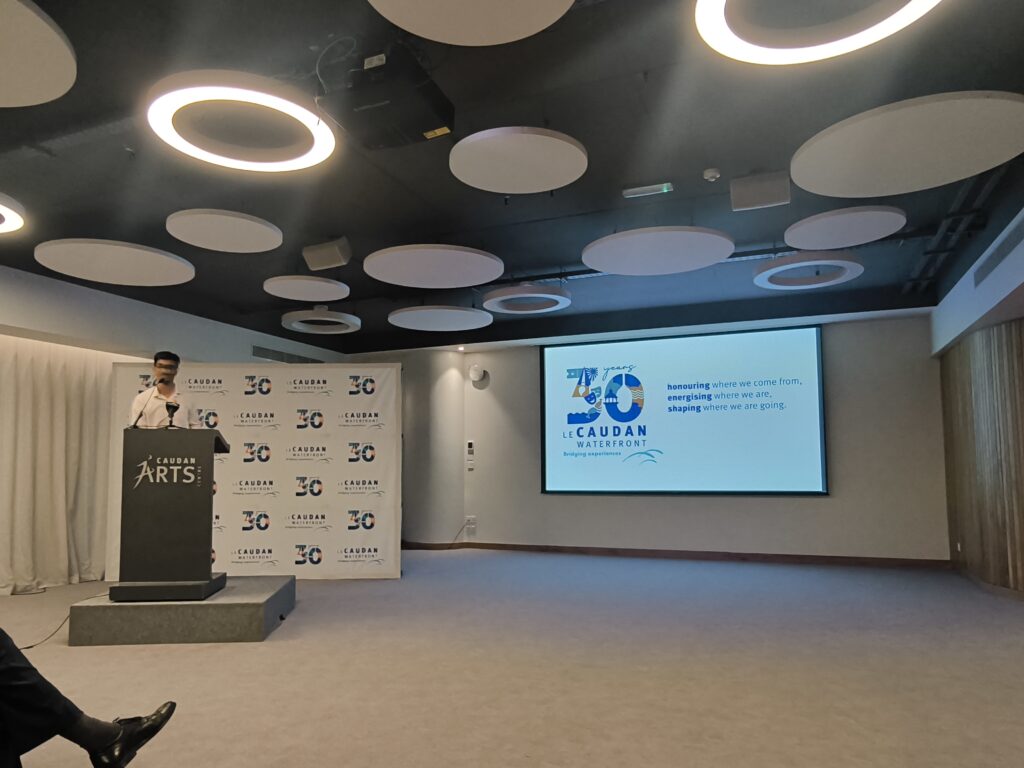
“The Arts Centre has reinforced our appeal as a destination for leisure and entertainment, increasing our prestige on both a national and international scale. It has also spurred a democratisation of culture. By offering programming tailored for families and children, we have drawn a new demographic back to Port Louis. The Waterfront has once again become a dynamic cultural pole, a meeting point where community and creativity intersect.”
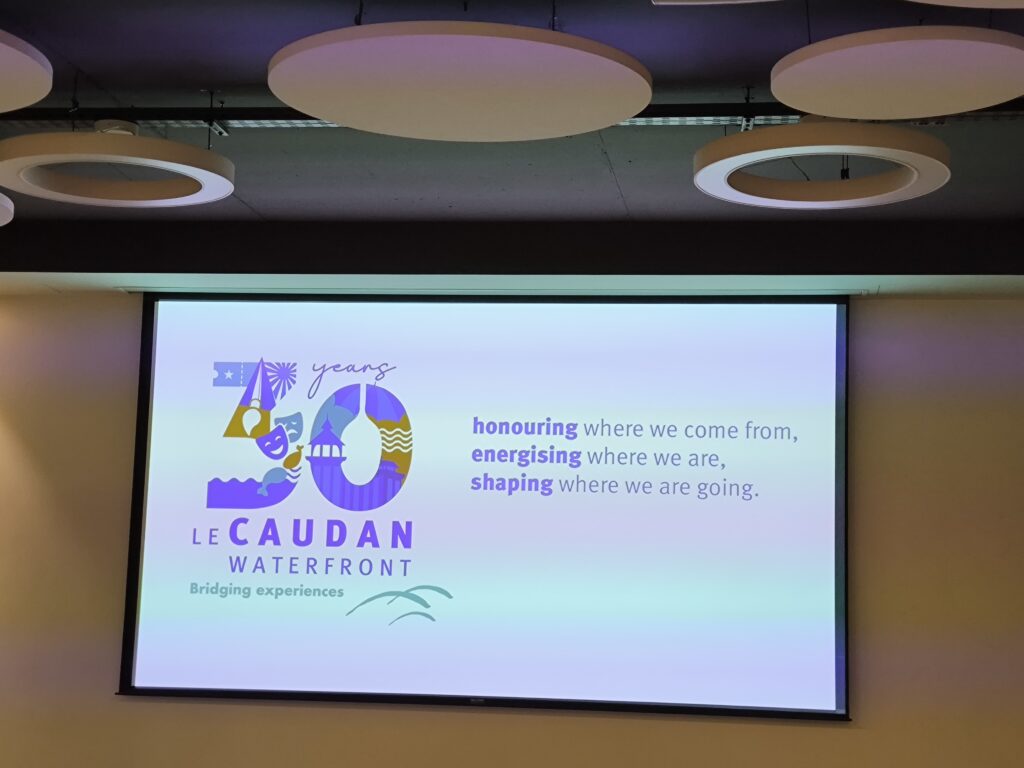
As part of the anniversary unveiling, Beesoondial invited the audience to look closely at the new commemorative logo, titled “Caudan 30.” Far from being a mere graphic, the logo serves as a visual anthology of the Waterfront’s diverse soul. It is anchored by the new official tagline: Bridging Experiences. “This logo represents the whole panoply of offerings we have at Caudan,” Beesoondial explained, guiding the audience through the intricate details of the design. “If you look closely, every element of our identity is woven into the ’30’. Perhaps I am a little biased, but the theatre aspect—the tickets that grant entry to the Arts Centre or the Blue Penny Museum—is front and centre. But it is just one part of the bridge.”
The logo serves as a “treasure hunt” for the observant visitor. Within its curves, one can find the undulating waves of the harbour, the silhouette of the iconic umbrellas, and a nod to the site’s vibrant culinary scene—neatly represented by subtle references to fine dining and the bustling food court. “Even the fine details matter,” he noted with a smile. “On the final edge of the design, you might spot the artist’s brush—a tribute to the creative heart of the Waterfront. This is what Caudan represents in 2026: bridging experiences and offering as many worlds as possible within a single, historic space.”
The Caudan’s position as a private development next to a UNESCO World Heritage site and several national museums presents a unique opportunity for urban synergy. When asked about the site’s relationship with its historic neighbours—including the Central Market and the Intercontinental Slavery Museum—Beesoondial revealed an ambitious vision for a more integrated capital. “It is vital to understand that while we began by looking inward, our goal now is to launch a cultural momentum that radiates throughout the entire city,” he explained. “We cannot control every variable in the urban landscape, but we are in active discussions with the authorities to ensure the Caudan acts as a catalyst for the surrounding neighbourhoods. For most visitors to Mauritius, the Caudan is already the natural starting point for their exploration of the city.”
Beesoondial envisions a future where the boundary between the Waterfront and the historic city becomes seamless. He describes a “circular” tourism model: visitors begin at the Caudan, venture out to the Aapravasi Ghat, the Central Market, or the Citadel, and eventually return to the quays to reflect on their journey. “We want to develop a ‘Cultural Heritage Path’ for Mauritius—an initiative that requires immense engagement with our partners across the city,” he noted. “We have already begun internal discussions to create these synergies. Just as the city has its iconic ‘Night Run’, we want to establish a cultural trail where the Caudan serves as the anchor. We are thirty years into this journey now; it is time to use our voice to help open up the city’s heritage to everyone.”
Looking toward the future, Beesoondial’s vision for the next thirty years is even more expansive. He envisions the Caudan not as an isolated island of culture, but as the anchor for a wider “Cultural Path” across the capital. “Port Louis is far more than an economic centre; it is a city steeped in history and collective memory. Our future project is to create synergies between institutions—linking the Blue Penny Museum, Odysseo, and other historic sites into a cohesive hub. We want to offer a complete experience: living arts, historical heritage, and educational discovery. This 30th anniversary is being celebrated in three dimensions: memory, the present, and the future. We are ready to turn the page to a new chapter where art and culture occupy the very centre of the stage.”
A Future in Bloom: The 2026 Calendar of Festivities
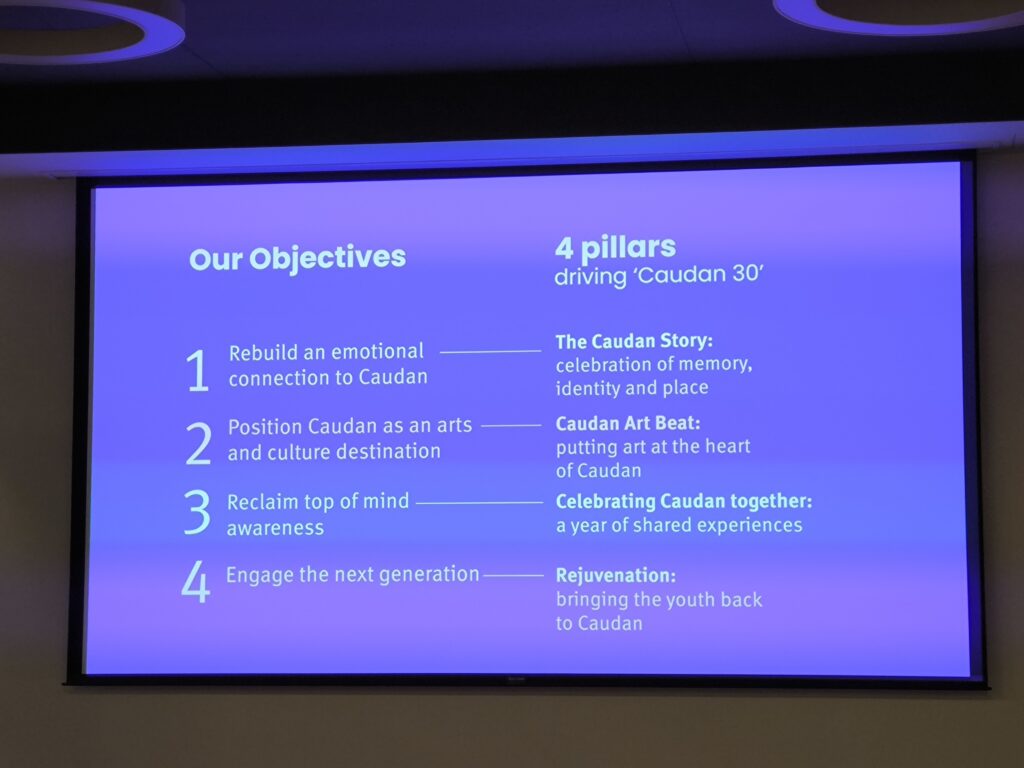
To honour these three decades of evolution, the Caudan Waterfront has unveiled a year-long programme that is less a retrospective and more a vibrant, living manifesto. Structured around four core pillars—the memory of the site, artistic creation, shared experiences, and the engagement of the next generation—the 2026 calendar is designed to ensure that the anniversary is felt by every Mauritian, regardless of age or background.
The journey begins in March and April with flagship events designed to stir the senses and reclaim the public space. Visitors will experience Ritmik, a powerful percussion concert that echoes the heartbeat of the docks, alongside the much-anticipated Caudan Food Festival. During these opening months, the promenade will be transformed by the installation of monumental “Caudan 30” letters and a large-scale participatory mural. This is a deliberate move by the management: by inviting the public to physically contribute to the art, the Caudan reaffirms that it is not a private enclave, but a collective canvas for the nation.
As the island moves into May and June, the focus shifts to the natural and cultural beauty of the Indian Ocean. Caudan en Fleur will offer an artistic celebration inspired by the floral world, turning the basalt walkways into a botanical gallery. This will be followed by the Festival Nouzil, a profound tribute to the diverse cultures of Mauritius, Rodrigues, Agalega, and the Chagos Islands. This festival serves as a reminder that the Caudan, as a port, has always been the gateway to the archipelago’s wider identity.
As the winter sun settles over the Moka Range in July and August, the Waterfront will turn its gaze inward toward the power of storytelling. The exhibition “30 Years, 30 Stories” will trace the history of the site through the intimate lens of personal testimonies—perhaps the stallholder who has been there since day one, or the couple who had their first date under the umbrellas in the nineties. This will be accompanied by the screening of a major documentary film detailing the architectural and social metamorphosis of the waterfront.
In September, a fresh visual campaign will be unveiled, a modern aesthetic designed to bridge the gap between the heritage of the past and the digital fluency of the future. The momentum continues into October with a return of the Caudan Food Festival and the prestigious arrival of the World ARC Rally, which sees the marina bristling with the masts of international voyagers. A particularly poignant moment will be the re-edition of Dikte dan Caudan for the International Day of Creole Language and Culture. It is a nod to a landmark moment in 2015 when the very first public dictation in Mauritian Creole took place on these quays, cementing the Caudan as a defender of local linguistic heritage.
The grand finale in November will culminate with a stunning installation by Ze Kolektif through the Creative Lab, and the Caudan Festival—a spectacular gathering of artists and performers. Through this ambitious programme, the Caudan Waterfront reaffirms its founding mission: to remain a vibrant crossroads where culture, creativity, and the Mauritian soul meet at the heart of Port Louis. As the 2026 celebrations unfold, they serve as a testament that while buildings are made of stone and steel, a true landmark is built on the memories of the people it serves.