

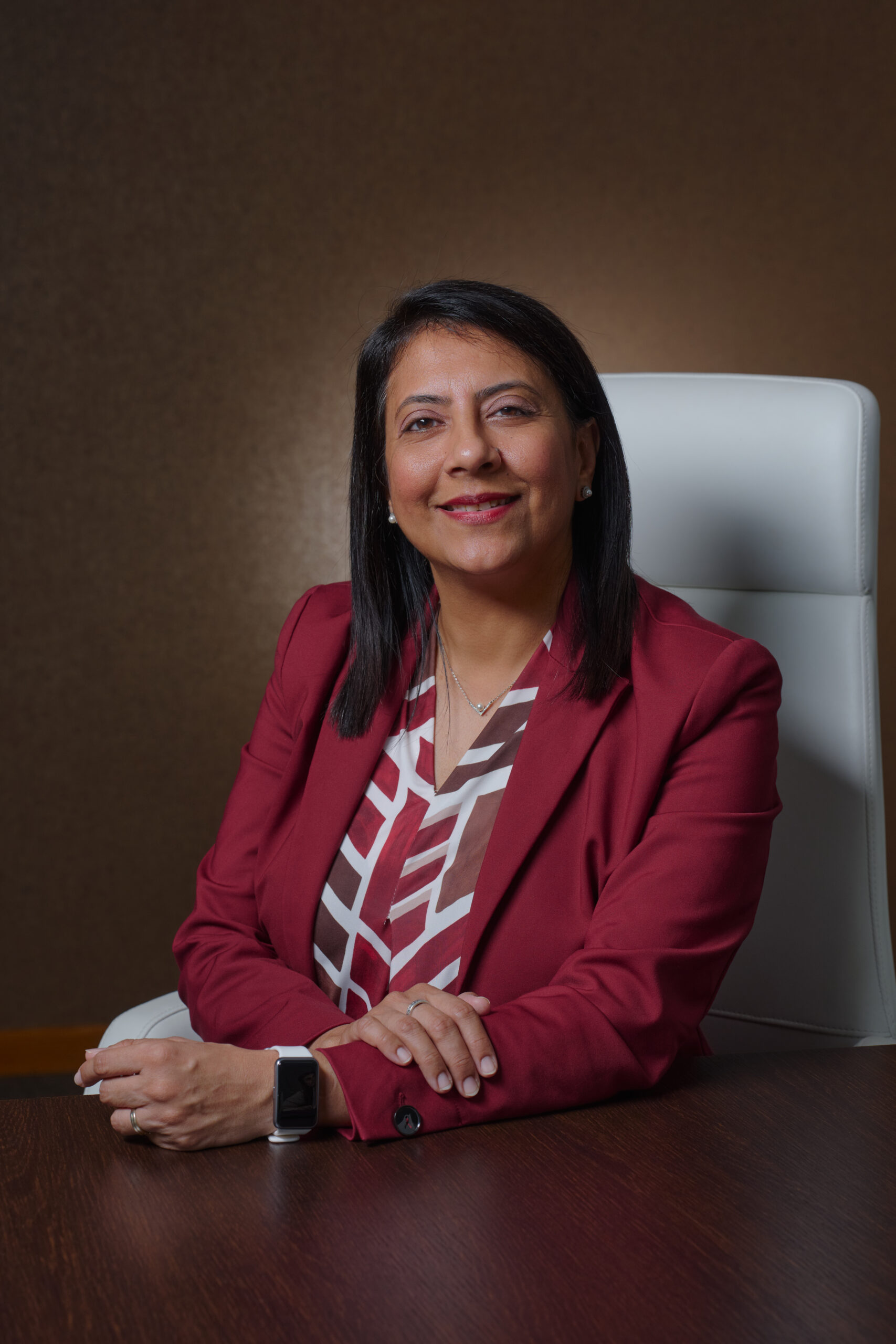
By Nigaar Abubaker Esmael
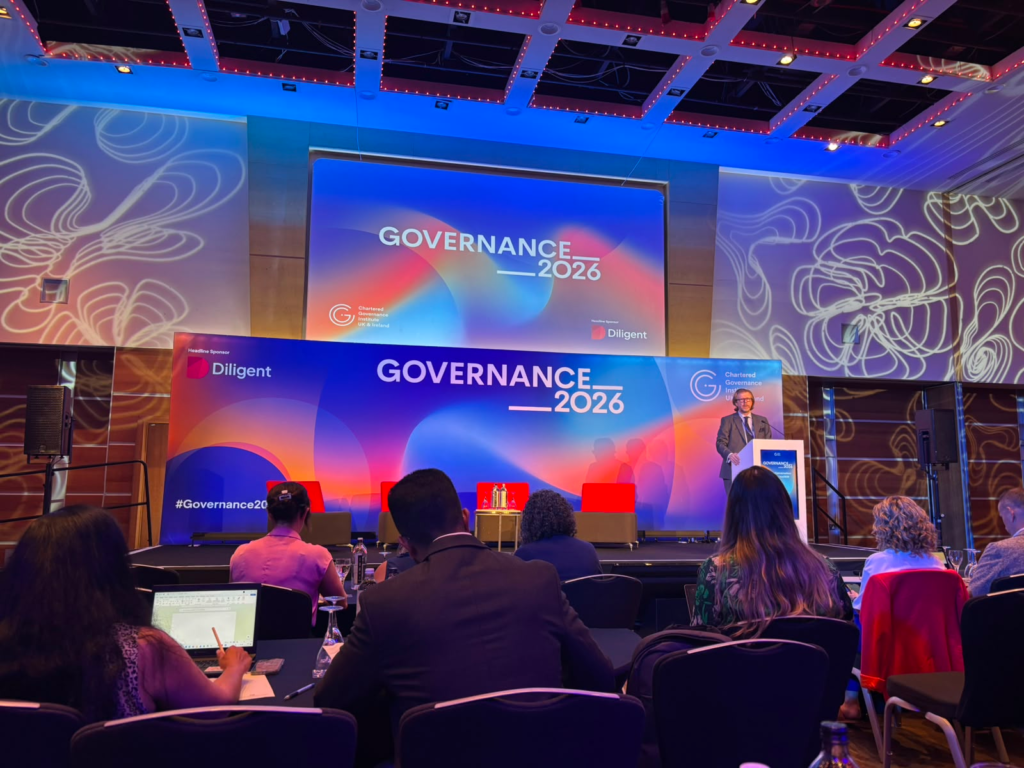
Earlier this month, I had the privilege of attending the Annual CGI Governance Conference in London, one of the most authoritative gatherings of Corporate Governance Professionals in the world. I returned to Mauritius with a clear and urgent message: the Governance profession is undergoing a transformation so significant that those of us practising it cannot afford to stand still.
The conference’s overarching message was unambiguous. Good Governance is no longer primarily about compliance. It is about enabling organisations to navigate uncertainty, technology, ethics and strategic risk while creating long-term value. Governance Professionals are increasingly expected to act as strategic partners to the Board, helping organisations remain resilient and future- ready. For Boards, Company Secretaries and Governance Professionals in Mauritius, that shift has profound implications.
AI Has Arrived in the Boardroom – Ready or Not
If there was one theme that dominated every session at the conference, it was artificial intelligence. AI Governance has moved from theory to Board practice. Boards are now expected to oversee AI not merely as technology risk managed by the IT department, but as a strategic, ethical and workforce issue requiring formal Governance frameworks. Directors need to understand not only how and what AI can do for their organisations, but the ethical boundaries within which it should operate and the reputational risks it presents when things go wrong.
Equally important was a candid conversation about AI in our daily professional lives. The message was straightforward: Governance Professionals must stay current with the latest AI tools, viewing them an aid to productivity and efficiency rather than a threat to the profession. The challenge, particularly for more experienced practitioners, is the pace of change, those who do not keep up risk making themselves redundant. This is not comfortable to hear, but it is necessary.

Geopolitics, Cybersecurity, and the Expanding Governance Agenda
Geopolitical developments are now Governance issues in their own right. Directors and Governance professionals must now understand how geopolitical tensions, trade disputes and regulatory fragmentation affect business strategy, risk management and resilience. These are no longer matters for governments alone, they sit squarely on the board agenda.
Cybersecurity, cyber ethics and organisational resilience were equally firmly repositioned as a Board accountability, matter rather than an IT one Boards must be prepared not just to prevent cyber incidents, but to govern through them, maintaining stakeholder confidence and institutional integrity when crises occur. In the context of the Mauritius International Financial Centre (MIFC), whose competitiveness rests on international trust, a Board that cannot articulate its approach to cyber resilience is not meeting the expectations of the market it serves.
This reflects a broader reality: Governance is becoming genuinely and increasingly multidisciplinary. Modern Governance Professionals are expected to hold working knowledge of AI, cyber risk, communications, regulation, ESG, stakeholder engagement and enterprise risk management, alongside the traditional Corporate Governance disciplines that remain our foundation.
The Governance Professional as Strategic Partner
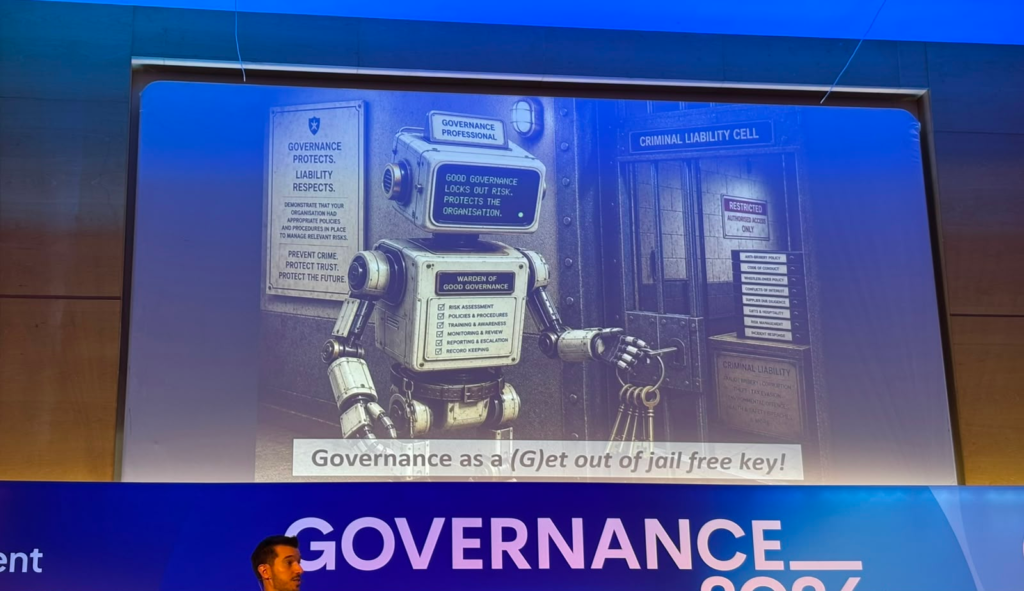
One of the conference’s most thought-provoking sessions was led by Joshua Domb, Founder and Managing Director of Gen-R Law, and Kayla Schembri, Head of Policy at CGI UK. They made the case that Governance Professionals are far more than administrators of process. We are, they argued, a company’s values in action: culture carriers, environmental guardians, social justice advocates within the ESG framework, and what they memorably described as the “Governance bodyguard” for Boards. We are also the gatekeepers of AI, and perhaps most reassuringly, the “get out of jail free card” for organisations, ensuring that the right controls are in place and locking out risk before it materialises.
Research presented confirmed that Governance teams are taking on broader responsibilities and greater influence across organisations. Professional visibility matters – those of us in Governance must actively demonstrate the value we bring rather than remaining permanently behind the scenes. There was much focus throughout the conference on elevating the profession accordingly.
Board Culture and Continuous Learning
High-performing Boards, the conference reminded us, should focus not only on structures and processes but on ethics, diversity, behaviour and organisational culture. Board culture remains central to effective Governance, and that culture starts with the people around the table and how they engage with one another.
The pace of regulatory and technological change means continuous learning is no longer a professional necessity, it is an obligation. Company Secretaries and Governance Professionals in Mauritius have a real opportunity to evolve into trusted strategic advisers to their Boards, rather than remaining focused primarily on statutory compliance aligning with the international best practice that leading financial centres are already embedding. That opportunity will not wait indefinitely.
What This Means for Mauritius
Translating these themes into practice, Mauritian Boards and Governance Professionals should consider the following:
- Act on AI governance now. Mauritian Boards should begin developing formal AI governance policies before regulation forces the issue.
- Rebalancing the Board agenda. More time should be allocated to strategic risk discussions, including cyber resilience, AI oversight and geopolitical developments.
- Redefine the Company Secretary’s role. Company Secretaries in Mauritius should increasingly be seen as Governance Professionals and must have the opportunity to evolve into trusted strategic Governance advisers, aligning with international best practice rather than remaining focused primarily on statutory compliance.
- Strengthen the case for the MIFC. The MIFC should reinforce its competitiveness by adopting Governance practices already emerging in the UK and other leading financial centres.
- Invest in director education. Boards should invest in directors education on AI, Cyber Governance and emerging risks to meet rising stakeholder expectations.
The Conference confirmed what many of us have long believed: good governance, done well, is one of the most powerful enablers of long-term organisational success. The question for Mauritius is simple: are we ready to lead, or are we content to follow? Food for thought.